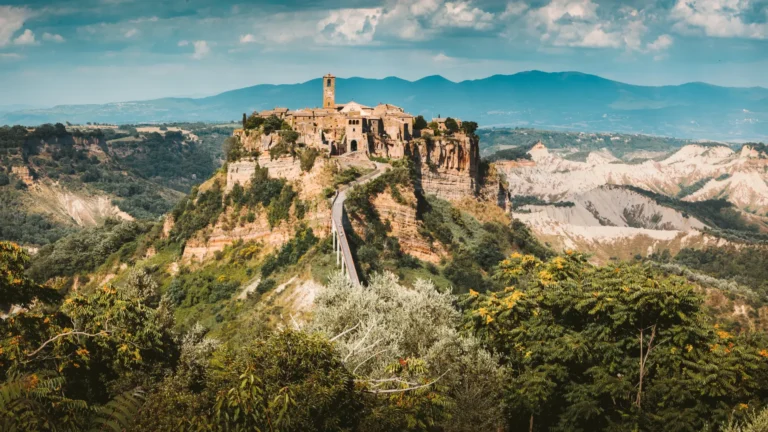
A honeymoon in Tuscany nearly always begins with an image. A cypress-lined road, a terrace above vineyards, a hill town on a ridge. Images are useful for working out what appeals, but they are the wrong place to start planning from. For a trip that happens once, the first question is what you want the days to feel like, and the destination follows from that.
What an image does not tell you is what staying there actually involves. How far the nearest town is. How much of the trip you will spend driving. Whether the other places you have in mind are twenty minutes away or two hours. Whether the pace of the days will suit the two of you.
Tuscany is large, and it is several genuinely different regions. Where you base yourselves decides more about the honeymoon than anything else you book, and it is the decision worth making first.
TUSCANY IS NOT ONE PLACE
— and the base you choose decides the honeymoon
Tuscany covers countryside, coast, art cities and hill towns, and choosing between them is the first real decision of the trip.
What changes with the base is not only the view. It is the services around you, the experiences within reach, whether you need to drive, whether there is somewhere to walk to in the evening or somewhere you have to plan for, and how much of each day ends up in the car.
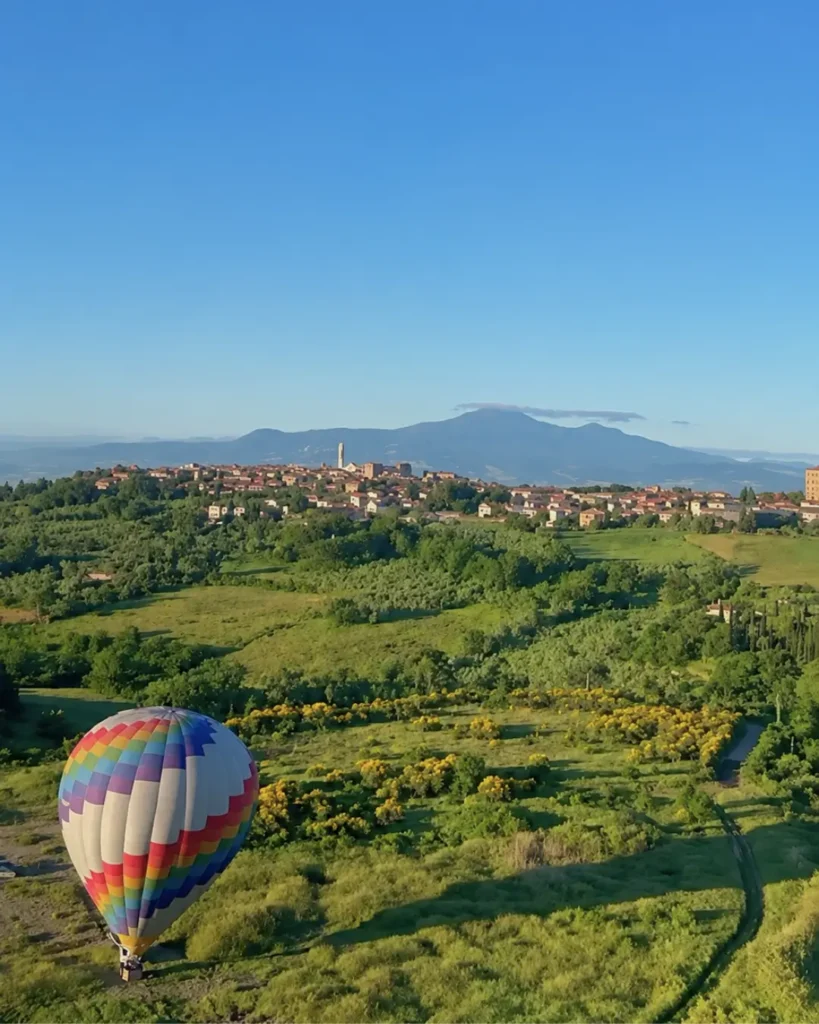
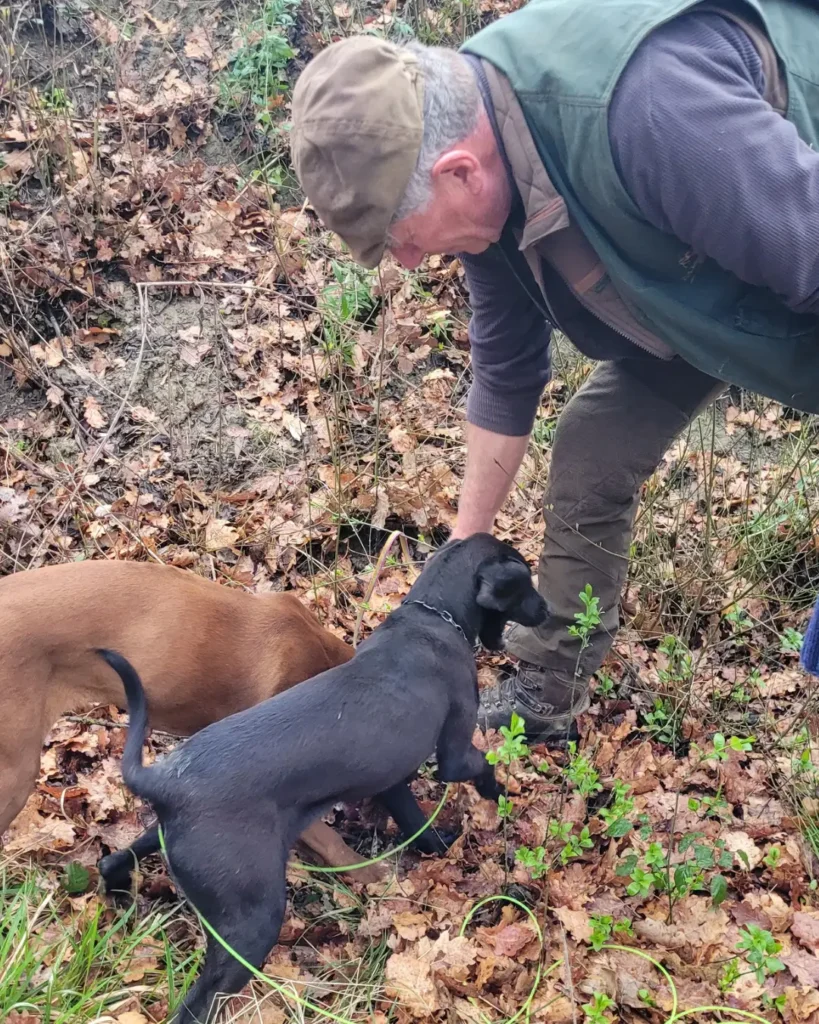
The image most people carry of Tuscany, the cypress-lined road on a ridge, belongs to one particular valley in the south rather than to the region as a whole. Some of what Tuscany is known for is tied to place in the same way. Balloons go up over Chianti and the Val d’Orcia. Truffle hunting belongs to specific parts of the hinterland. The thermal spas are in the Val d’Orcia, the Val di Chiana and the Maremma. Artisans are in the towns. Cooking classes and wine tastings you will find almost anywhere, though being in the countryside is what gets you onto the estates themselves rather than into a tasting room in town.
Those are the well-known ones. Plenty else is tied to a particular area too, which is why the starting point is not a place at all. It is what interests the two of you, who you are, and what you want the honeymoon to feel like.
1. CHIANTI
for couples who want vineyards close to the cities
Chianti sits between Florence and Siena, which makes it easy to combine with either as a second base rather than treating them as day trips out and back.
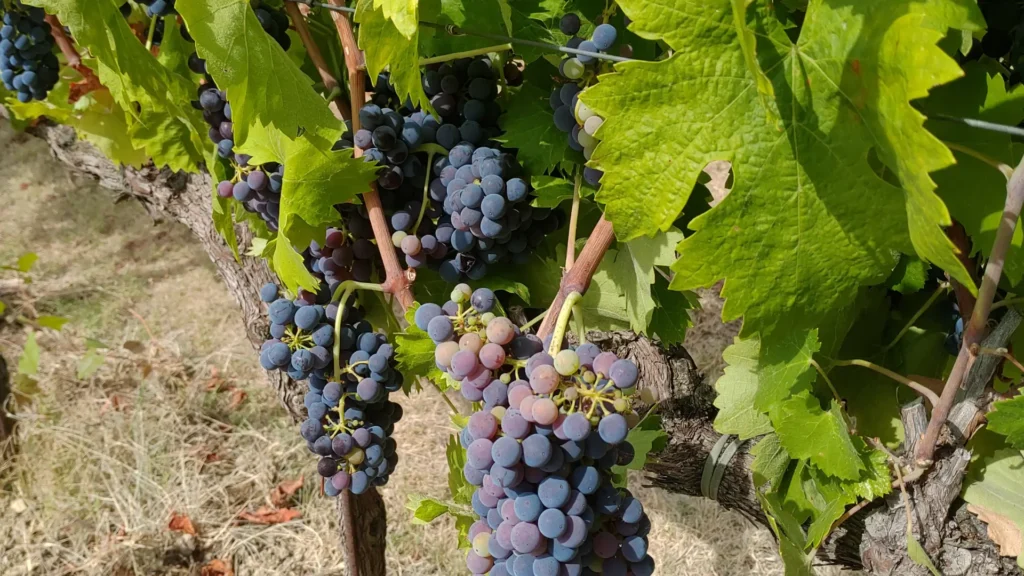
The wine is the reason most couples come. This is one of the best-known wine regions in the world, and being here gets you onto the estates themselves, tastings at the property, a picnic among the vines, a cellar visit with the family that runs it. Cooking classes are straightforward to arrange, and truffle hunting is possible in parts of the area.
The places to stay suit two people. Farm stays and small eco-luxury estates, quiet, with pools and views, built for slowing down.
This is the area for couples who want the wine and the countryside without being far from a city.
2. VAL D’ORCIA
for couples who want landscape, countryside and thermal baths
This is the Tuscany most people picture, the cypresses along the ridges and the small towns on the hills, and it is worth knowing that the landscape looks like that on purpose. It was shaped from the fourteenth century as an idealised version of how countryside should look, and the UNESCO listing is for the landscape itself.
That changes what a honeymoon here is. In Chianti you plan around the wine. Here the landscape is what you came for, and much of what you do takes place in it. Cycling, a vintage car or a Vespa for the day, a hot air balloon, truffle hunting in season, wineries around Montalcino.
The towns are close enough to be part of the days rather than excursions. Pienza is the one most couples want, a small Renaissance town built to a plan. Castiglione d’Orcia is the medieval hill town people imagine when they imagine one. Bagno Vignoni has a thermal pool in the middle of the square, and the spas here and in the Val di Chiana are among the better reasons to come. Some couples take a day, others build several around them.
The stays are farm stays and small estates. Siena is close, so a city day is easy from here. Florence is further, and if you want both properly, it works better as a second base than as a drive out and back.
3. FLORENCE AND SIENA
for couples who want the art, the food and the energy of a city
A city base makes sense for a honeymoon in Tuscany that is also a first trip to Italy, when part of what you want is the sightseeing everyone comes for. It works as long as the days are built properly. The mistake is planning around the famous sights alone, which is exhausting and leaves you with the same version of the city everyone else got.
What changes it is what sits underneath, and that should be built around what the two of you are actually interested in. Artisan workshops still working, private access to places usually closed, a perfume or a piece of jewellery made for you and taken home afterwards. And enough time left in the days for the two of you rather than a schedule of monuments. Where you stay matters here too. Some of the better places are fifteen minutes from the centre, close enough to walk in, far enough that you are not living inside the crowds.
Florence is the obvious one, the Renaissance city, and the busiest. It also has the best fine dining in Tuscany, Michelin included, alongside the trattorie, the enoteche where you drink Tuscan wine by the glass, and a cocktail scene that has quietly become very good. Gucci was founded here, and its Garden in Piazza della Signoria holds both an archive and the Osteria, run under Massimo Bottura, which has a Michelin star of its own. At the other end, the bistecca alla fiorentina is a whole rib of Chianina beef, cooked rare and shared between two, and it is part of the city’s culture.
Siena is the quieter alternative, medieval rather than Renaissance, smaller, and it opens onto the Crete Senesi, the clay hills south of the city, which are a genuinely less obvious choice for a honeymoon in Tuscany and fit well into a wider trip.
If your dates fall around the Palio, that is worth deciding on rather than stumbling into. Siena is at its busiest, and if you want to be there for it, a private window over the piazza is the way to see it properly.
You do not need a car in either city, and will not want one. For the countryside around Siena, you will, for the flexibility and to reach the places worth reaching.
THE KIND OF PLACE YOU STAY IN
— and how it shapes a honeymoon in Tuscany
Once you know roughly where in Tuscany you want to be, the second decision is what kind of place to stay in, and it matters more than it looks. The same area gives you a very different honeymoon depending on whether you are somewhere with full service and a restaurant or somewhere small and rural where the day is yours to organise.
Start from what you expect the accommodation to do. Whether you want service on hand or would rather be left alone. Whether meals should be there or out. How much you want to be away from other people. Whether outdoor space, a pool, a spa matter to you or not. Those answers narrow it quickly.
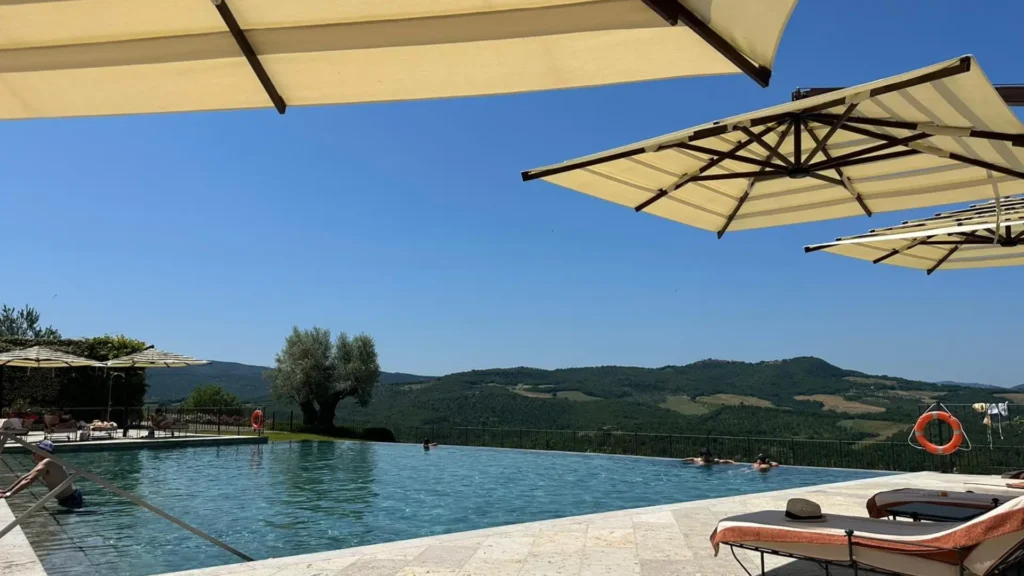
High-end estates in the countryside give you the most. Hotel service in a rural setting, a pool, a restaurant, a concierge who can arrange what you want to do, and enough on site that going out is a choice rather than a necessity.
Spa resorts are built around wellbeing and privacy, which suits couples who want time and space in the days rather than a full schedule.
Farm stays run from simple to genuinely refined. At the upper end they are small and well run, with farm-to-table dining and a handful of rooms, and they give you more of the working countryside than an estate does. Lower down they are exactly what they sound like, and if you are expecting service and a spa you will not find them there.
Hotels are mostly a city choice, and in Florence and Siena they are the right one.
Villas work too if that is what you want, though for two people they often come with more space and more self-catering than a honeymoon needs.
None of these is better than the others. The mismatch is what causes problems, expecting one kind of stay and booking another.
Something worth reading alongside this is villa versus hotel in Italy, which goes into the trade-off properly.
HOW MANY NIGHTS FOR A HONEYMOON IN TUSCANY
— and what to pair it with
Florence needs three nights at a minimum. For the countryside, five to seven works better, because the point is to settle in one place rather than move between towns. Some of those days you go out, some you stay where you are, particularly if there is a pool or a spa.
Beyond that it depends on whether Tuscany is the whole honeymoon or one part of a longer trip. As the whole trip, a week in the countryside with a few nights in Florence at either end covers it comfortably. As one leg of something bigger, four nights in the countryside is the least I would give it, and five is better.
What pairs well is mostly a question of logistics and what you are interested in. Rome is a straightforward drive from the Val d’Orcia, or a private transfer if you would rather not. Going north, the train from Florence reaches Bologna, the Dolomites, and Lake Garda, among plenty of other places. The food and motor valley around Bologna is worth doing but needs planning properly rather than treating as a day out.
Umbria is the one I would think twice about. It sits right next to Tuscany and it is lovely, but the countryside overlaps enough that you can end up with two versions of the same days.
Not many people expect it, but Tuscany has a coast. Versilia in the north, around Forte dei Marmi, is the part that works for a couple wanting a few days by the sea, and it pairs naturally with the Cinque Terre further up.
There is no single right combination. It comes down to how long you have, how you want to move around, and what the two of you actually want out of the days.
WHICH TUSCANY IS YOURS?
— and where to go from there
Tuscany is one of the easier places to fall for and one of the harder ones to plan well, because so much of it looks the same in photographs and is not the same at all to stay in. Get the area right and the days work on their own. Get it wrong and you spend the honeymoon driving to the trip you thought you had planned.
If you are still weighing Tuscany against other parts of Italy, my Italy honeymoon destination finder matches destinations to the kind of trip you want.
And if what you want is for someone to take the whole thing off your hands, that is what I do. You can read how I plan an Italy honeymoon, or start with the conversation below.
QUESTIONS COUPLES ASK ME
— about a honeymoon in Tuscany
Where is the best place for a honeymoon in Tuscany?
There is no single best place, and the honest answer is that it depends on what you want the honeymoon in Tuscany to look like.
Chianti suits couples who want vineyards and estate visits, with Florence or Siena close enough to add without much effort. The Val d’Orcia suits couples who want the landscape, the hill towns and the thermal baths. Florence and Siena suit couples who want art, food and a city around them, particularly on a first trip to Italy.
Start with what you want the trip to feel like, and the area follows from that.
Is Chianti or Val d’Orcia better for a honeymoon?
Neither is better. They give you different trips.
Both are serious wine regions. Chianti is the better known of the two, and staying there puts you within reach of the estates for tastings, cellar visits and lunches among the vines. The Val d’Orcia has Brunello around Montalcino and Vino Nobile at Montepulciano, which are as good as anything in Tuscany.
The difference is what surrounds the wine. Chianti sits between Florence and Siena, so a city is straightforward to add. The Val d’Orcia is further from Florence, and more of what you do happens outdoors, cycling, a vintage car or a Vespa for the day, a balloon, the hill towns. It also has the thermal baths, which Chianti does not.
So if you want wine with a city nearby, Chianti. If you want wine with the landscape and the spas, the Val d’Orcia. They are close enough to combine if you want both, though that means moving base partway through.
How many nights do you need for a honeymoon in Tuscany?
For Florence, three nights is the minimum. Less than that and you are moving in and out rather than staying.
For the countryside, five to seven. The point is to settle somewhere and let the days vary, some out, some spent where you are, particularly if there is a pool or a spa. Four nights is the least I would give it, and it will feel short.
If Tuscany is the whole honeymoon, a week in the countryside with a few nights in Florence at either end covers it comfortably. If it is one leg of a longer trip, keep the countryside stay to a single base rather than trying to fit two in.
Do you need a car in Tuscany?
In the countryside, yes, or a private driver. Chianti and the Val d’Orcia are built around small towns and rural properties, and without a car you are dependent on whatever your accommodation can arrange.
In Florence and Siena, no, and you will not want one. Both are walkable and parking is a problem rather than a convenience. If you are basing yourself in a city and taking day trips, those can be arranged by train or with a private driver depending on where you are going.
If neither of you wants to drive on the honeymoon, that decision should shape where you stay rather than being solved afterwards. It either points you towards a city base, or it means building private transfers into a countryside stay from the start.
When is the best time for a honeymoon in Tuscany?
It depends on what you want out of the days. May and early June are the easiest. Warm enough to be outside all day, not hot enough to plan around, and everything is open. More on spring in Italy if those are your dates.
Summer is the busiest. In the cities it can be hard work, hot stone underfoot and crowds everywhere. In the countryside it works better, particularly at an estate with a pool, where long days and slow afternoons are what you came for.
September brings the harvest and thinner crowds, but the weather is less settled, so anything outdoors wants a backup day rather than a fixed date.
Winter suits the cities, which are far quieter, and it suits the thermal spa resorts, which are built for exactly that time of year. Some places close out of season, though the Val d’Orcia and Chianti keep enough open year round that it is rarely a constraint.
Where should you stay in Tuscany for a honeymoon?
It depends on what you want the accommodation to do, and the answer changes the trip more than people expect.
High-end estates in the countryside give you the most. Service, a pool, a restaurant, someone who can arrange what you want to do, and enough on site that leaving is a choice.
Spa resorts are built around wellbeing and privacy, which suits couples who want time and space rather than a full schedule.
Farm stays run from simple to genuinely refined. At the upper end, they are small and well run with farm-to-table dining. Lower down they are exactly what they sound like, so if you are expecting service and a spa you will not find them.
Hotels are mostly a city choice, and in Florence and Siena they are the right one.
The mistake is booking one kind of place while expecting another. Work out first whether you want service on hand or to be left alone, whether meals should be there or out, and how far from other people you want to be.
Is Tuscany or the Amalfi Coast better for a honeymoon?
They are different trips.
The Amalfi Coast is vertical and compact, cliff towns above the sea, boat days, and everything close enough that you can see plenty from one base. It can be slow too, if you want it to be. A hotel with a pool and a terrace over the water is not a place you need to leave every day.
Tuscany is horizontal and spread out. Countryside, wine, hill towns, long lunches. It is much larger, which is why where you base yourselves matters more here than it does on the coast.
If you want the sea and some glamour, Positano and the Amalfi Coast. If you want countryside, wine and space, Tuscany. Couples who cannot choose sometimes do both, though they are far enough apart that it needs the days to make sense.
If you are weighing them up properly, it is worth reading about the other honeymoon destinations in Italy before deciding.