A honeymoon in Venice is usually planned as a night or two, tacked onto the start or the end of something else. That is how the city is sold, and it is the single biggest mistake couples make here.
Venice was the capital of a republic that lasted a thousand years, and almost everything that republic accumulated is still standing, in a city you can cross on foot in an hour. The density is the point. There is more packed into those few square kilometres than into regions many times the size, and most of it sits behind doors that a two-day visit never opens.
I have planned Venice for couples, and the pattern is always the same. Nobody leaves having run out of things to do. Even a week would not be enough to properly experience the city. This sets out what actually fills the time, and how long Venice deserves.
WHY VENICE GETS RUSHED
— and what most couples never see
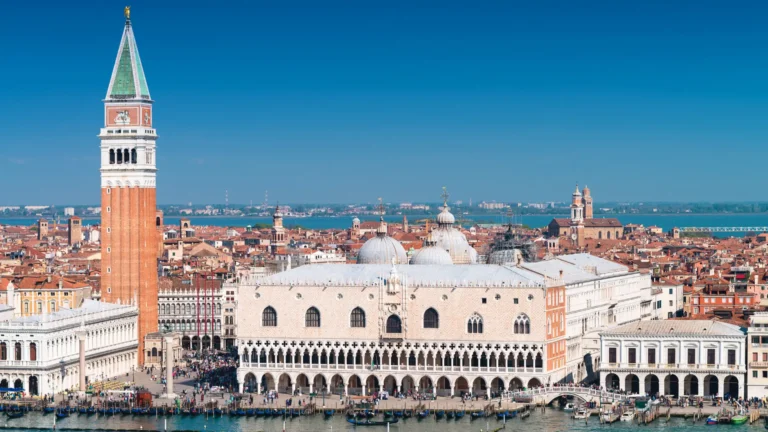
On a honeymoon in Venice, you will hear about the same three things everyone else does. San Marco, the Rialto, a gondola. Most honeymooners do them, and they leave believing they have seen Venice, because the city has been presented that way for so long that it is hard to imagine what else there would be.
The rest of it does not announce itself. Venice hides behind plain doors and along canals that lead nowhere in particular. The great artistic schools with their painted ceilings, the workshops still making glass and lace and oars and paper by hand, the gardens behind walls, the islands that each take a day. None of it is on the standard route, and none of it is difficult to reach. It just takes more time than people give it.
That is what makes Venice work as a honeymoon rather than a stop. You are not moving between places. You settle in one, and the city opens gradually.
1. THE CITY BEYOND SAN MARCO
for couples who want to see what the day visitors miss
Venice has six sestieri, and the crowds concentrate in a small part of one of them. Cannaregio, in the north, is where a good deal of ordinary Venetian life still happens, quieter canals, neighbourhood bars, long straight fondamente to walk in the evening. Giudecca sits across the water from the main island, close enough to reach in minutes, far enough that it feels like somewhere else entirely.
The art is the argument for staying longer. The Scuola Grande di San Rocco holds a cycle of Tintorettos he spent much of his life painting, room after room of it, and no crowd worth mentioning. The Frari has Titian above the altar and Titian himself buried in the floor, along with several doges, Monteverdi, and a monument to Canova. San Zaccaria has a Bellini altarpiece and a crypt that floods, so you look down at the tombs through standing water. The Scuola Grande di San Teodoro is barely visited at all.
On Giudecca, the Redentore was built by Palladio as a votive church after the plague of 1576, and Venice still crosses the water to it every July on a bridge of boats.
There is more than the old masters. The Peggy Guggenheim Collection sits in her unfinished palazzo on the Grand Canal, twentieth-century work in a house that still feels like one. The Correr, on Piazza San Marco, covers the republic itself, how it governed, traded, and saw itself. La Fenice is worth a performance if the calendar allows, and worth seeing even if it does not.
And there are gardens, which almost nobody associates with Venice. The Royal Gardens sit just behind Piazza San Marco, restored a few years ago and free to walk into, with a café in the old pavilion. The Carmelitani Scalzi keep a mystic garden behind their monastery walls near the station. Both are minutes from the busiest parts of the city and almost always quiet.
This is the Venice that takes days rather than hours, and it is the strongest argument for giving a honeymoon in Venice more than a passing stop.
2. THE LAGOON
for couples who want the islands, not the island tour
The lagoon is the part of a honeymoon in Venice most couples underestimate. It is nearly always sold the same way, Murano and Burano together in a single day, back for the late afternoon. Both are worth seeing, but done like that you are moving through them with everyone else who bought the same trip, and you come away with photographs rather than any sense of the place.
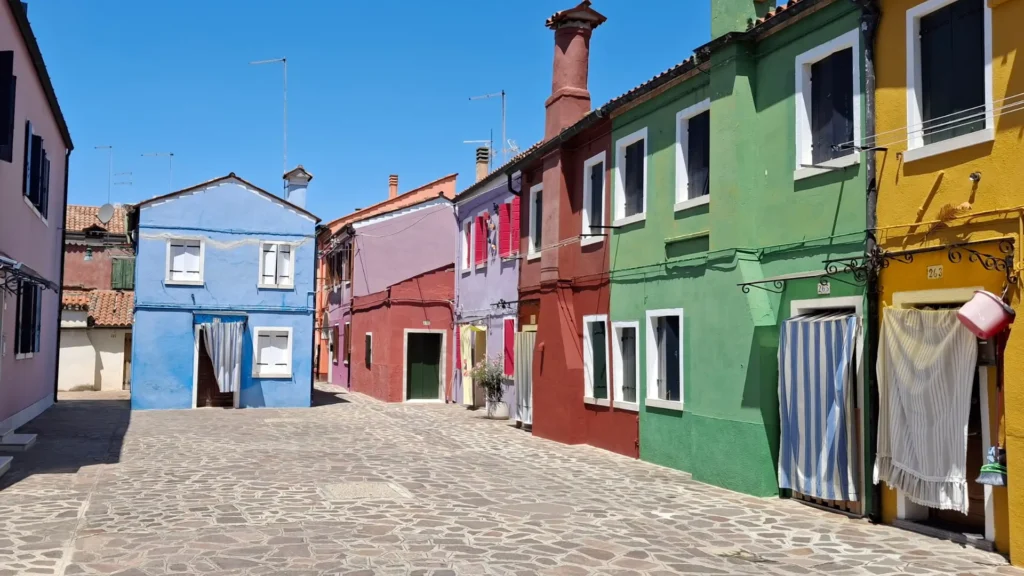
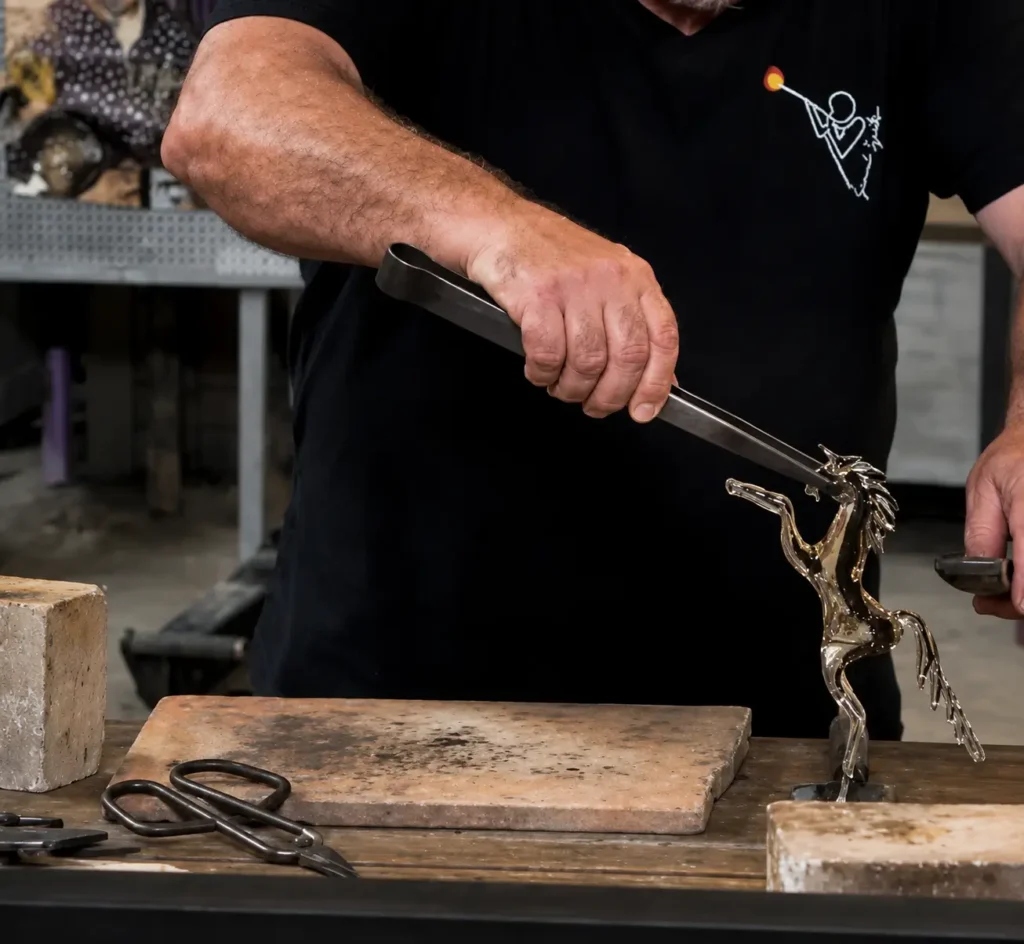
Given a day each, they are different. Murano has been making glass since the furnaces were moved off the main island in the thirteenth century, and the workshops are still working. Burano is where Venetian lace was made, and a few women still make it. Across a wooden bridge from Burano is Mazzorbo, quieter again, where a walled vineyard grows Dorona, a grape that had all but disappeared from the lagoon. You can visit the vineyard with a guide, and there is a restaurant on the estate with a Michelin green star, cooking what the island and the lagoon produce.
Then there are the islands nobody sells. Sant’Erasmo is the market garden of Venice, flat and green and almost entirely agricultural, best seen by bicycle, and it will not feel like the same lagoon at all. San Lazzaro degli Armeni has been an Armenian monastery since the eighteenth century, and its library holds thousands of early printed books and more than four thousand manuscripts. Torcello was the first place settled out here and is now nearly empty, a cathedral with Byzantine mosaics and very little else.
San Giorgio Maggiore faces San Marco across the water. It has a bell tower of its own, and while the queues form at the one on the piazza San Marco, this one is quiet and looks straight back at the city, which the other cannot do.
The pacing is the whole point. Take one island a day and the lagoon becomes the reason you stayed longer. Take them all in a single day, and you have seen none of them.
3. THE LIDO
for couples who want a beach fifteen minutes from San Marco
Almost nobody plans a honeymoon in Venice expecting a beach, which is why the Lido is such a useful thing to know about. It is a narrow strip of land eleven kilometres long, sitting between the lagoon and the open Adriatic and shielding the city from it, and it is three vaporetto stops from San Marco. It also has roads, cars and bicycles, which after a few days in Venice feels genuinely strange.
The beach runs the whole length of it and covers the full range. At one end are the old bathing establishments with their private cabanas, full service and a restaurant, the kind of arrangement Italians have perfected. At the other is the Murazzi, a free stretch along the great Istrian stone sea walls with no services at all, where you take a towel and find your own space, and the further south you walk the quieter it gets. Beyond that, the dunes at Alberoni are a protected nature site.
The Lido has a history that explains the architecture. It was rural until the late nineteenth century, when the first bathing club, the roads and the boat connections turned it into one of Europe’s fashionable summer resorts, which is where the Liberty villas along the avenues come from. Italy’s first commercial airport was here.
The film festival has run on the island since the 1930s and can be visited properly with a guide, which is worth doing for the buildings and the history even outside festival week. At the southern end, Malamocco is a small quiet borgo that was Roman before Venice was Venice, and the Jewish cemetery near San Nicolò dates from 1386 and can be seen by arrangement.
It is also flat and easy to cycle. For a couple staying several days in the city, a day here changes the rhythm completely.
4. ON THE WATER
for couples who want the city seen the way it was built to be seen
Venice was built for boats, and everything else came second, which is why seeing it from the water is not a novelty here but the point.
The gondola is the obvious one and it is worth doing, though not the way most people do it. A short circuit of the busy canals in the middle of the day is the version that disappoints. Go later, take the quieter waterways, and it becomes something else entirely.
Better still, learn to row one. Venetian rowing is done standing, facing forwards, and there are people in the city who will teach you. It is harder than it looks and more satisfying than watching someone else do it, and it is the closest a visitor gets to how Venetians actually moved around their own city for a thousand years.
Then there is the private boat, which is the one couples remember from a honeymoon in Venice. A boat for the two of you, out into the lagoon in the evening, with an aperitivo on deck or dinner served on board. You can take it anywhere, out towards the islands, along the Giudecca canal, past the palazzi on the Grand Canal with the lights coming on. It costs more than a gondola and it lasts hours rather than minutes.
The lagoon is also still a working place. There are fishing families out there, market gardens on Sant’Erasmo, boatyards where the gondolas are built and repaired. It is easy to treat all this water as scenery, and it is worth remembering it is a place where people work.
5. FOOD AND WINE
for couples who want the genuine lagoon food
Venice takes enormous numbers of day visitors, and where those routes run the food follows the crowd rather than the other way round. Step off them and Venice has a cuisine entirely its own, worked out over centuries from what the lagoon produces and what the republic brought back from everywhere else.
The way in is cicchetti. These are small plates served in bacari, the old wine bars, eaten standing at the counter. You order them with an ombra, which is what Venetians call a small glass of wine, from the days when the sellers moved their stalls around the campanile to keep the wine in the shade. An evening of it means moving between several bars, a plate or two and a glass at each, and it will take you through parts of the city you would not otherwise walk. A spritz works just as well, and the bitter most Venetians use in theirs has been made in the city since 1920.
For sitting down, the osterie are where to do it. Small neighbourhood restaurants, usually family-run, where the local dishes actually live, the fish, the risotto, the vegetables from Sant’Erasmo. Away from the main routes, the prices are still sensible.
The Rialto market has fed the city for centuries, and locals still shop there. The fish counters are the main event, and they are worth being early for. A cooking class is one of the better things a couple can do here. A few hours making Venetian dishes together, and you can cook them again at home. Some places run food walks too, which is a different way to spend a morning.
Beyond that, the range runs a long way. There is serious fine dining, Michelin included, and there are historic palazzi where dinner can be arranged privately for the two of you. The lagoon itself makes wine, and the Veneto behind the city makes a great deal more, from Prosecco in the hills to Amarone and Soave further west, so the wine is rarely the weak part of a meal.
Food is part of Venetian culture, and experiencing the city through its recipes tells you as much about Venice as the sights do.
6. THE CRAFTS STILL WORKING
for couples who want to see things being made
Venice made things for a thousand years, and a surprising amount of it is still being made, usually behind a plain door in a street you would have no reason to walk down.
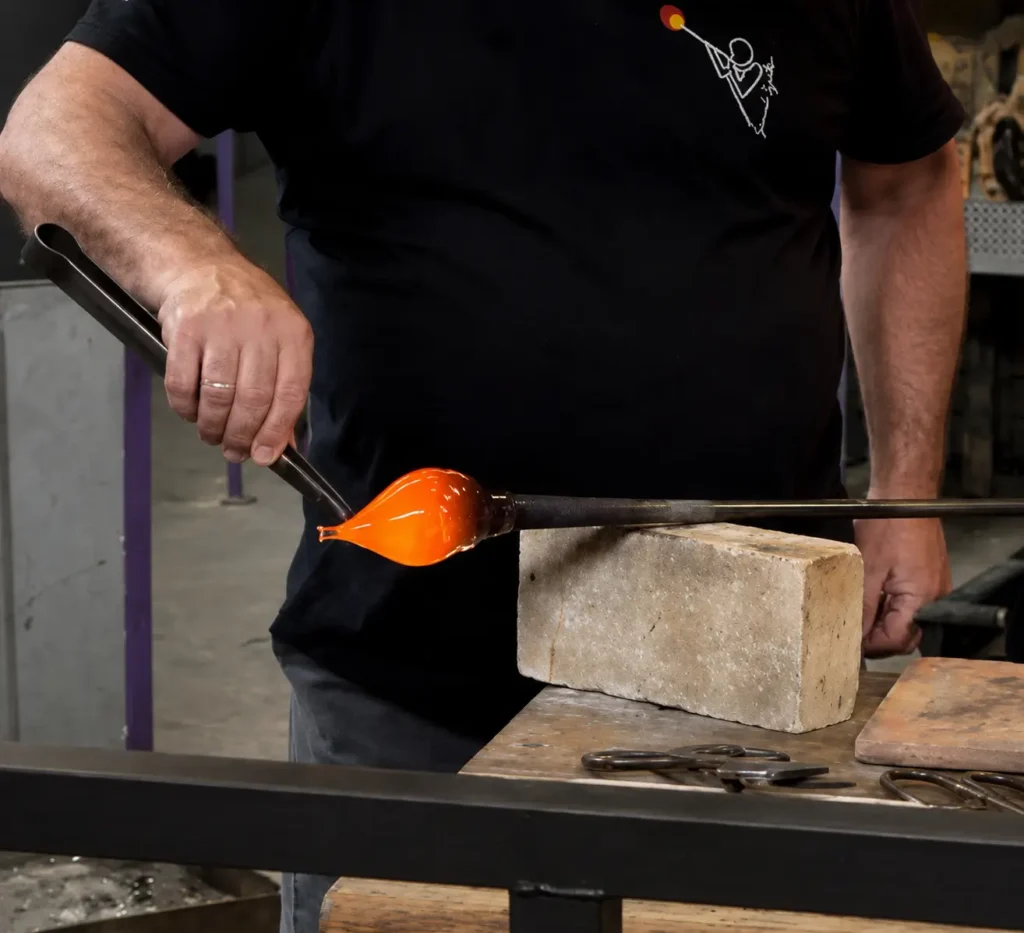
Glass is the one everybody knows, and Murano deserves the visit, though the interesting part is watching someone work rather than being shown a showroom. Lace on Burano is the same story, still made by hand by a small number of women. Mosaics have been made here since the Byzantine period, and there is a furnace in the city still producing the smalti and gold leaf that restorers use on the great churches.
Venice has been making scent for centuries, on the spices and resins the republic traded, and there are still perfumers here who will take a couple through blending something of their own. It is a good few hours, and you leave with a bottle nobody else has, which on a honeymoon in Venice is a better souvenir than most.
Then there are the trades most visitors never hear about. Masks are still carved and painted properly by a handful of workshops, as opposed to the printed things sold on every bridge. Paper is still marbled and bound by hand. There is weaving, on looms that have not changed much in centuries. And there are the boatbuilders, the squeri where gondolas are still made and repaired, and the carvers who make the oars and the forcole, the curved wooden rests each one shaped for a particular rower.
Some of these places take visitors, and some can be arranged privately. It is the part of Venice that most rewards a slower trip, because none of it is on a route, and once you have seen a forcola being cut, you genuinely understand something about this city.
HOW MANY NIGHTS DOES A HONEYMOON IN VENICE ACTUALLY NEED
— and what to do if you only have three
Three nights is the minimum. A day trip, or a single night on the way to somewhere else, gives you the version everyone else sees and nothing underneath it.
Four or five is comfortable if the rest of the itinerary allows. It is enough to take an island properly, spend a morning somewhere quiet, and still eat well without rushing.
If Venice is the whole honeymoon rather than one stop in it, a week works, and by the end you will have some real sense of the city rather than a set of highlights.
If you have three nights and they are already booked, the answer is not to move faster. It is to choose differently, and to alternate. A day on the crowded routes takes more out of you than you expect, so put something quieter beside it rather than stacking them, a vineyard visit, an afternoon in a workshop, a garden, a slow dinner. Three nights spent that way will leave you with more than three nights of queuing.
Venice also pairs well, so the number of nights you give it depends on what else is in the trip. The Prosecco hills, Verona, Padua, Lake Garda and the Dolomites are all close, and any of them makes a natural second base for a honeymoon that starts or ends in Venice. If you are still deciding where else to go, it is worth looking at the other honeymoon destinations in Italy first.
What I would avoid is the Rome, Florence and Venice run. Three cities in a line is the most tiring way to see Italy, and on a honeymoon it is the wrong shape for a honeymoon entirely, three sets of crowds, three museums’ worth of walking, and no time anywhere to stop.
STILL DECIDING?
— that is the normal place to be
A honeymoon in Venice is one of the easier trips to fall for and one of the harder ones to plan wel, because so much of what makes it worth staying for is not visible from the outside. The mistake is almost never choosing Venice. It is giving it two nights and a gondola and wondering afterwards what everyone else saw.
If you are still weighing Venice against other parts of Italy, my Italy honeymoon destination finder matches destinations to the kind of trip you want.
And if what you want is for someone to take the whole thing off your hands, that is what I do. You can read how I plan honeymoons in Italy, or start with the conversation below.
WHAT COUPLES ASK ME ABOUT A HONEYMOON IN VENICE
— and the honest answers
Is Venice good for a honeymoon?
Yes, on two conditions. It has to be planned around the two of you rather than around the list everyone else works through, and it has to be given enough time.
The difference between a good Venice trip and a bad one is mostly pace. A bad one is built around sights and ends up exhausting, full days of walking and queuing with nothing left over. A good one balances what you genuinely want to see against time that belongs to the two of you, and it makes room for the things that go beyond the obvious, which are usually what couples remember.
The romance is worth being honest about too. Venice is genuinely romantic, but only when you have some of it to yourselves. Shoulder to shoulder with a few thousand other people at the same three places, it is not romantic at all, and couples who arrive expecting it to be and find otherwise come away disappointed. That is a planning problem rather than a Venice problem.
How many nights do you need for a honeymoon in Venice?
Three nights is the minimum, and that is a floor rather than a recommendation. You can get a day out on the lagoon and see the main things, but not much beyond that.
Four or five is where it starts to open up, if the length of your trip allows. That is enough time for the quieter parts of the city, for slowing down, and for the things that sit underneath the obvious, which is where Venice stops being the version everyone else knows and starts to surprise you.
If Venice is the whole honeymoon rather than one stop in a longer trip, a week is not too much. The city does not run out.
Is Venice worth more than a day trip?
Yes, and the assumption that it is not is the most common mistake people make about this city.
Venice is small on a map, and that is where the confusion starts. But the amount packed into it is out of all proportion to its size. Six sestieri, a lagoon full of islands that each could take you a day, centuries of art and history, and workshops still making glass, lace, paper, perfumes and boats by hand.
A few hours gets you San Marco and the Rialto, at their busiest, and nothing else. That is the version most day visitors leave with, and it is why so many people believe they have seen Venice when they have seen almost none of it.
What is there to do in Venice besides St Mark’s and a gondola?
More than most people expect, and most of it is quieter than the main sights.
There are boat excursions out into the lagoon, with an aperitivo on deck or dinner served on board. There are artisan workshops where you can watch glass, masks and marbled paper being made, or blend a perfume yourselves. There is the food, which runs from family-run osterie to Michelin dining, and there are vineyards on the lagoon islands where you can taste and have lunch. The Lido has a proper beach, fifteen minutes from San Marco. There is opera at La Fenice. And there are palaces normally closed to the public that can be visited privately, which is one of the better things you can arrange here.
The point of a honeymoon in Venice is that you have time to get to any of it. A day visitor does not.
When is the best time for a honeymoon in Venice?
Late spring and early autumn are the easiest. Warm enough to be out all day, and without the worst of the crowds.
Summer works too, but you should know what you are getting. It is the hottest time of year and the busiest, with day visitor numbers at their peak. If those are your dates, plan around it rather than hoping it will be fine, the quieter parts of the city, the islands, the Lido, and things booked well in advance.
Venice in late autumn and winter is a different city again, quiet and often beautiful, though colder and with the chance of high water. Some couples prefer it for exactly that reason. The exception is the Venice Carnival in February, which is the busiest part of the winter and brings a season of private events in the historic palazzi, if that is the kind of thing you would want to be part of.
Is a gondola ride worth it?
Yes, though not the way it is usually done.
The gondola is a genuinely remarkable boat. It is built asymmetrically, longer on one side, so that a single person rowing standing on the right can hold a straight line. Each one is made by hand, and the oar rest is carved individually to suit the rower who will use it. There are only a handful of yards left that still build them.
Done as a short circuit of the busiest canals in the middle of the day, it is a queue, a photograph and a fairly high bill. Taken along quieter waterways, or paired with a visit to a squero or an oar maker so that you understand what you are actually sitting in, it becomes something else.
What I would avoid is treating it as the romantic thing you have to tick off. That is how it gets disappointing.
What can you combine with Venice?
A great deal, and it sits naturally in a northern Italy itinerary. Padua, Verona, Lake Garda, the Prosecco hills, the Dolomites and Milan are all close, and any of them makes a sensible second base.
Rome, Florence or Bologna work too if the trip is long enough. What I would avoid is stringing several cities together in a row. Three cities back to back is the most tiring way to see Italy and the wrong shape for a honeymoon, where the point is to slow down rather than keep moving.
If you are still deciding where else to go, it is worth looking at the other honeymoon destinations in Italy before you fix anything.