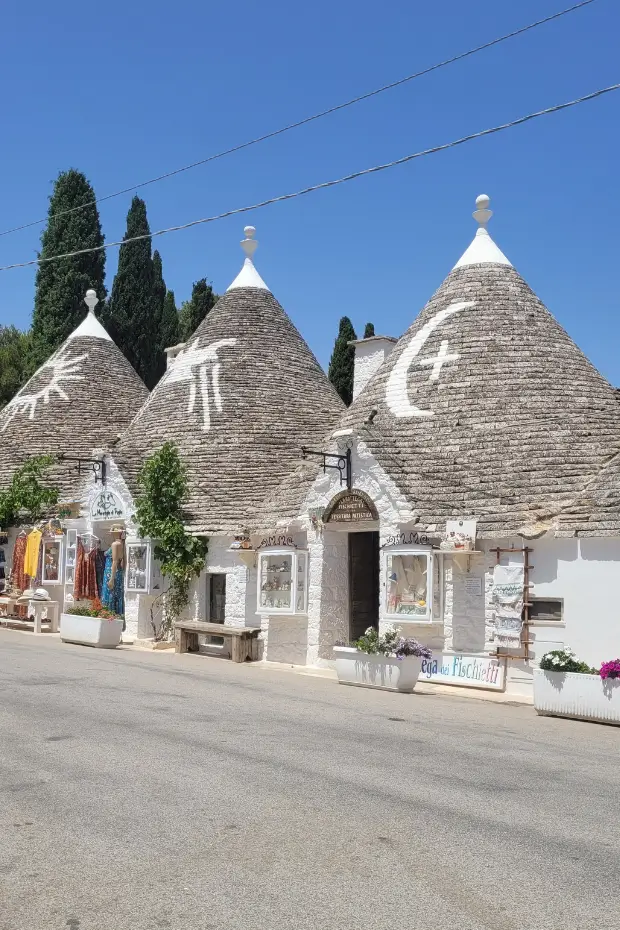
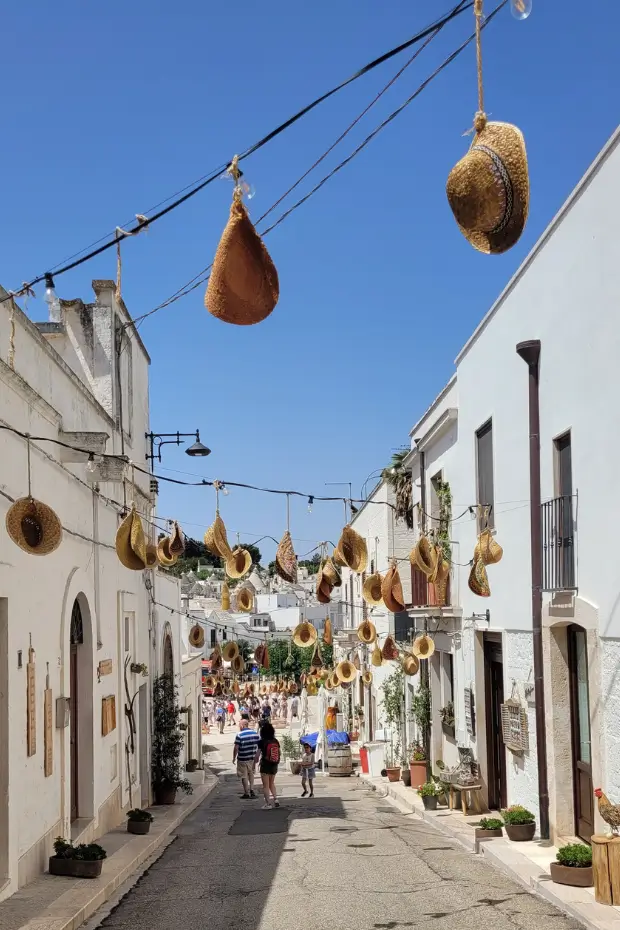
Is Alberobello worth visiting? Yes, but nearly every guide sells it as a hidden gem, and that part is wrong. It stopped being hidden years ago, and what is left is one of the most photographed and most day-tripped towns in southern Italy, souvenir shops filling the lanes and a small crowd forming at the same three spots everyone already has on their phone.
Walk through it, and the truth sits somewhere in the middle. It is genuinely beautiful. It also, in parts, feels staged, a town performing itself for people who came for the picture without ever asking what they were looking at.
What actually makes Alberobello worth visiting is easy to miss on a two-hour stop between other places. So the real question is not whether to go, but how long to stay.
WHAT ALBEROBELLO IS FAMOUS FOR
the trulli, the history, and the setting
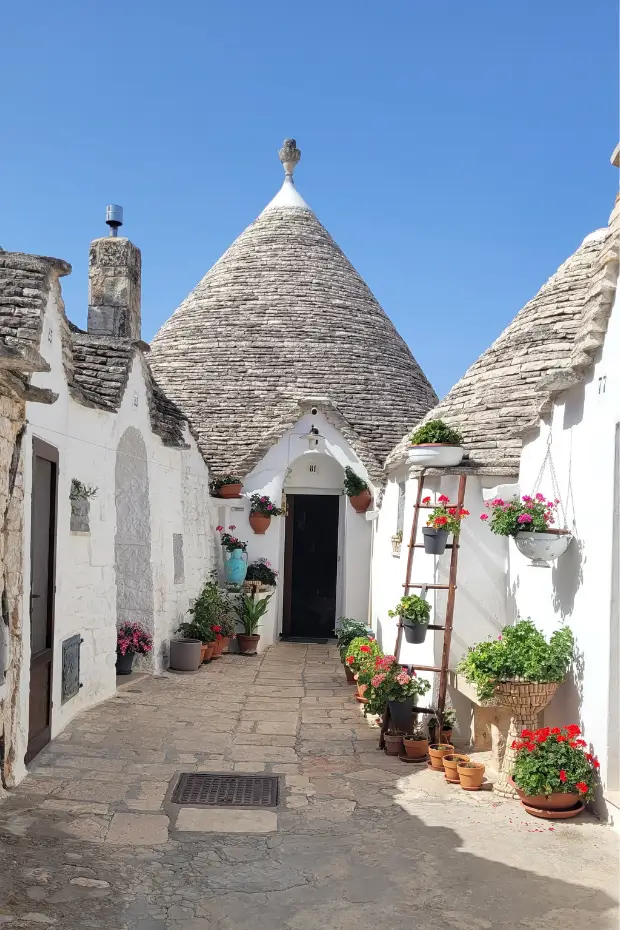
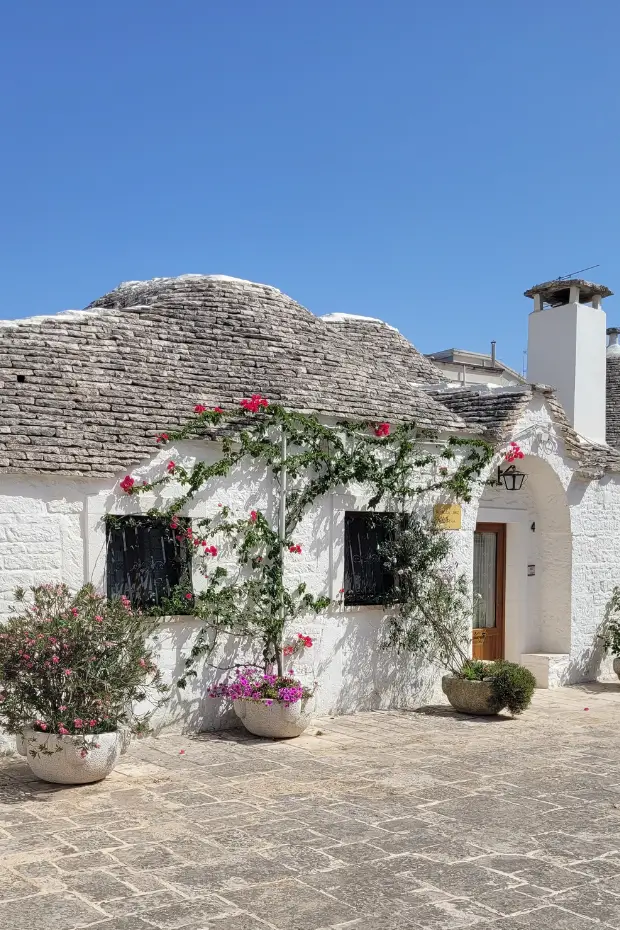
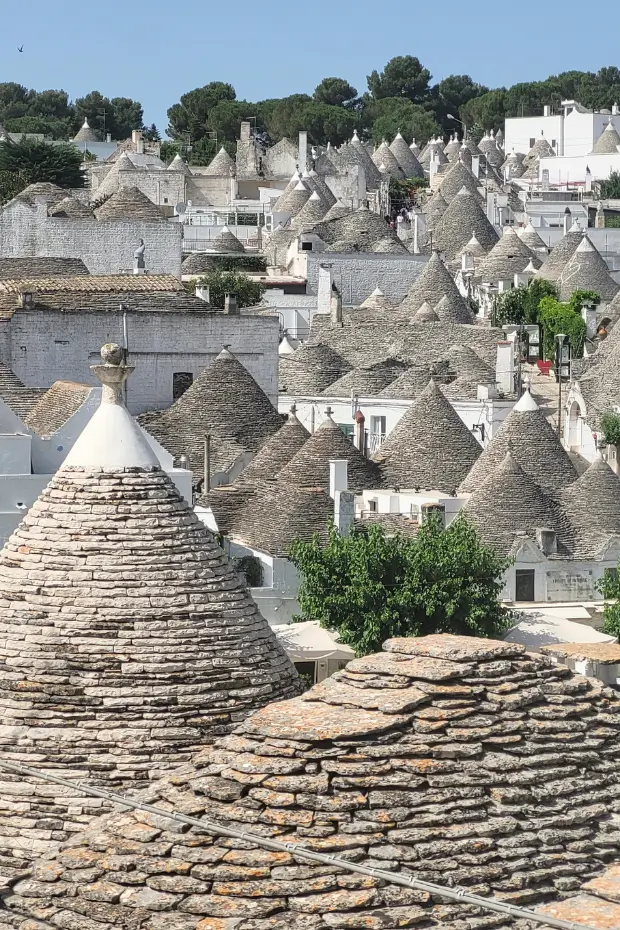
Alberobello is famous for its trulli. These are small houses of whitewashed stone with conical grey roofs, built dry, without mortar, and there are more than a thousand of them packed into two neighbourhoods, Rione Monti and Aia Piccola. Nowhere else in Italy has them at this density, which is why the town is UNESCO-listed.
The reason they were built without mortar is a tax one. Under the Kingdom of Naples, tax was owed on finished, permanent houses. A trullo built dry could be taken apart in a hurry, a roof lifted and a wall dropped before the inspector arrived, then put back together once he had gone. The method stayed, and it became the way the whole town was built.
The beauty is not in question. More than a thousand trulli on two hillsides is genuinely singular. What matters is that the look being real and the town being undiscovered are two different claims, and only the first one is true.
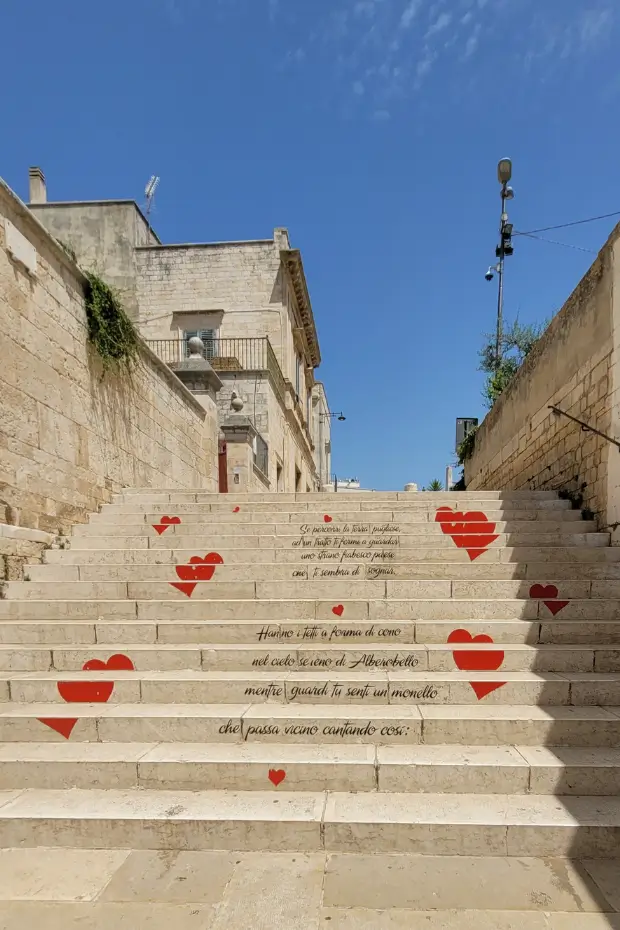
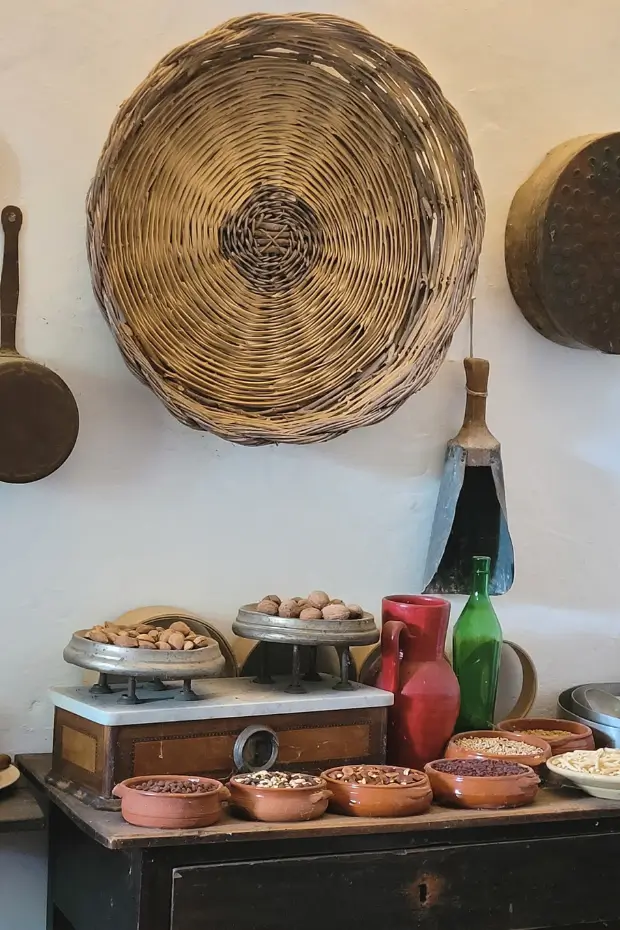
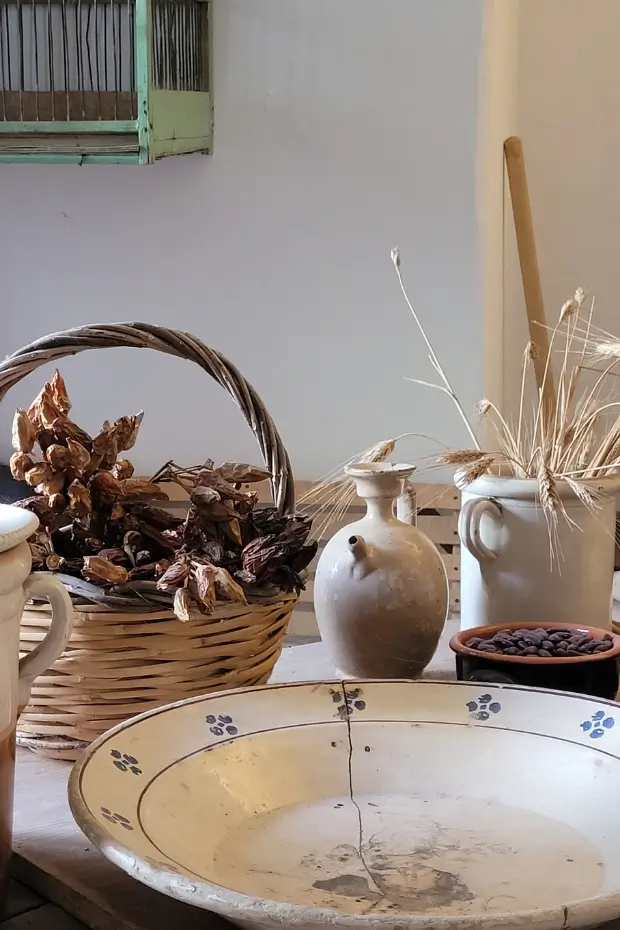
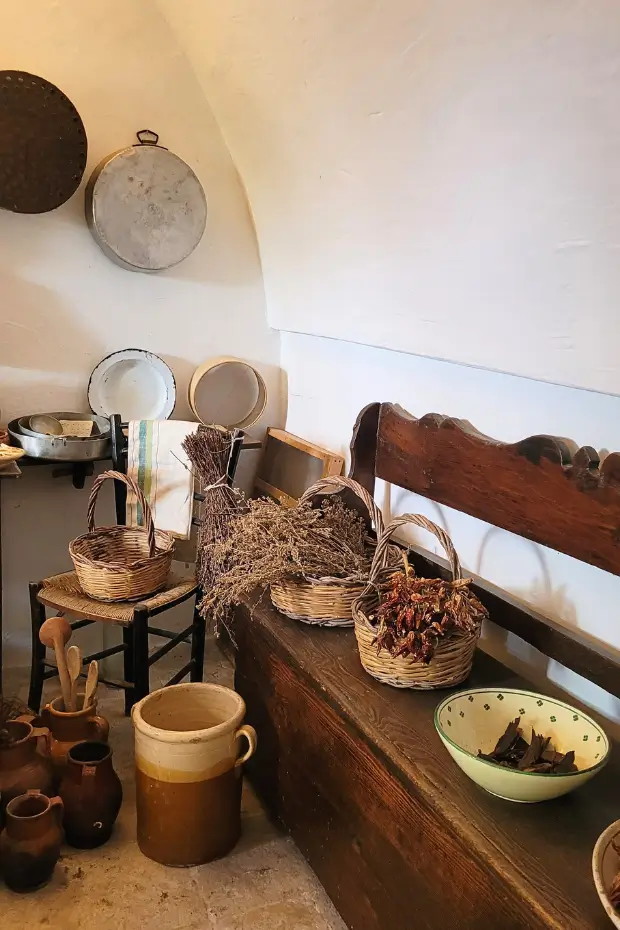
IS ALBEROBELLO WORTH VISITING AS A DAY TRIP?
or worth staying the night
Alberobello sits in the Valle d’Itria, the countryside at the centre of Puglia, and it is one of the region’s white towns. It is also small. You can walk the trulli districts in a morning, which is why almost every Puglia itinerary pencils it in as a day trip, usually from Bari or from a base further along the coast. If your plan is to cover ground, slotting it in is a reasonable call.
Where the usual advice goes wrong is the two or three hours most itineraries give it. In that window you are really only there to photograph the lanes and leave. You will not have time to go inside Trullo Sovrano, the only two-storey trullo and the one place that shows how a family actually lived in these houses. You will not sit down to eat properly, and the food here is as much a part of the heritage as the trulli. And you will be there in the same hours as everyone else, because the day-trippers come through the morning and clear out by late afternoon, when the town is at its most crowded.
So a day trip is not the mistake. Treating it as a photo stop is. If you are giving Alberobello a day, give it a real one, enough time to go inside, to eat somewhere the day-trippers are not, and to see the lanes once the crowd has thinned. That is the difference between having seen Alberobello and having a picture of it, and it is the same mistake people make with Erice in Sicily, a hill town worth a proper visit rather than a drive-by.
WHY STAY IN OR AROUND ALBEROBELLO
a base for the Valle d’Itria, the white towns and the coast
Staying changes what Alberobello is. Once the day-trippers have gone, the lanes are quiet, and the evening and the early morning are the calmest hours the town has. The stronger reason to stay, though, is position. Alberobello sits in the middle of the Valle d’Itria, which makes it less a place to tick off and more somewhere to work outward from.
You can stay in the town itself, among the trulli, or take a masseria or a trullo retreat out in the countryside around it. The countryside means some short driving, but it also means quiet lanes, better dinners, and the slower pace the valley is actually about. Which one suits you comes down to whether you want to walk out of your door into the town or into the countryside.
From either, the rest of the valley is close. Locorotondo, Martina Franca, Ostuni and Polignano a Mare are all within thirty to forty-five minutes, and the Adriatic coast is not much further, so a few nights here can hold the white towns, a stretch of sea, and the things the valley does well, olive oil and wine tastings, a day on a bike through the countryside, a cooking lesson in Puglian food.
This is also why Alberobello works for groups and for families travelling together. The masserie and the larger trulli are often built for several bedrooms under one roof, which suits a multigenerational trip or a group of friends better than a row of hotel rooms. Making it all connect, where to base yourselves, what to see on which day, and how to time the town itself, is the part worth planning properly.
PLANNING A TRIP TO PUGLIA
where Alberobello fits into a wider trip
Alberobello is almost never the whole trip. It is one piece of Puglia that also has a long coastline, a string of other white towns, and cities like Bari, which is where most people fly in and the usual place to start. How much weight Alberobello carries depends on what the rest of the trip is doing.
There is no single formula for this. A trip that leans towards the countryside spends its nights in the valley and treats the towns as day pieces. One that leans towards the sea bases nearer the coast and turns inland for Alberobello and a few others. One built around the cities gives more time to Bari, Lecce and the baroque south, with Alberobello as one stop among several. The same place sits very differently in each.
What makes the difference is less Alberobello itself and more the shape around it. How many bases you want, how much you are willing to move between them, and who is travelling. Whether you are driving or relying on public transport matters too, since it decides how much of the valley is within reach. A couple with a week, a family with young children, and a group travelling together will each want Alberobello placed differently in the trip. That is the part worth working out before anything is booked.
ALBEROBELLO, PUGLIA
your questions, answered honestly
Is Alberobello worth visiting as a day trip?
Yes, as long as the day trip is a real one. Alberobello is small and easy to reach, so it fits a Puglia itinerary without staying over. What does not work is the two or three hour photo stop most tours give it, which leaves no time to go inside Trullo Sovrano, the only two-storey trullo, to sit down to the local cooking without rushing, or to see the town once the day-trippers have gone. Give it more than half a day, and treat it as a place to understand rather than photograph, and a day trip is worth it.
How many days do you need in Alberobello?
For the town itself, a full day is enough to get past the main lanes and wait out the day-trip crowds. As a base it is different. Two or three nights is the point where you can use it as a base and pair it with a couple of the nearby towns or a day in the countryside, and more if you want a fuller holiday built around the area. There is no single right answer. It depends on how the rest of the trip is shaped and what you want from it.
Is Alberobello too touristy?
Yes, especially in the middle of the day. The main lanes of Rione Monti fill with day-trippers and souvenir shops, and in those hours the town is at its most crowded. It is not the hidden gem it is often sold as. How touristy it feels, though, comes down to timing. Early in the morning and in the evening, once many of the day-trippers have left, the lanes are quiet and easy to walk, and that is a very different Alberobello from the midday one. None of that makes Alberobello less worth visiting, it only makes the timing matter.
Is Alberobello worth visiting over the other white towns?
It is not really a question of better or worse, they do different things. Alberobello has the trulli at a density nowhere else matches, which also makes it the busiest. Locorotondo and Martina Franca are quieter and more lived-in, Ostuni is the white hill town with the long views and the better dining, and each is a short drive away. If you only have time for one, Alberobello is the most distinctive to look at, but the others are easier to spend unhurried time in. Most trips through the Valle d’Itria do not choose between them. They pair Alberobello with one or two of the others and take the contrast.
Is Alberobello good for families and groups of friends?
Yes, with the same caveat as anyone. As a rushed midday stop it is hard work with children, hot in summer and crowded in the narrow lanes. It works much better when you are based in or near the town with some space, a masseria or a larger trullo with a garden or a pool, which also lets a family or a group of friends stay under one roof rather than spread across hotel rooms. Seen that way, Alberobello and the valley around it suit a multigenerational trip or a holiday with friends well.