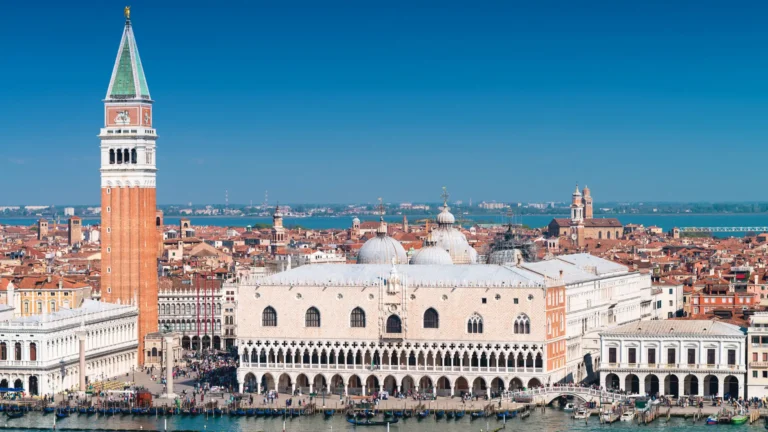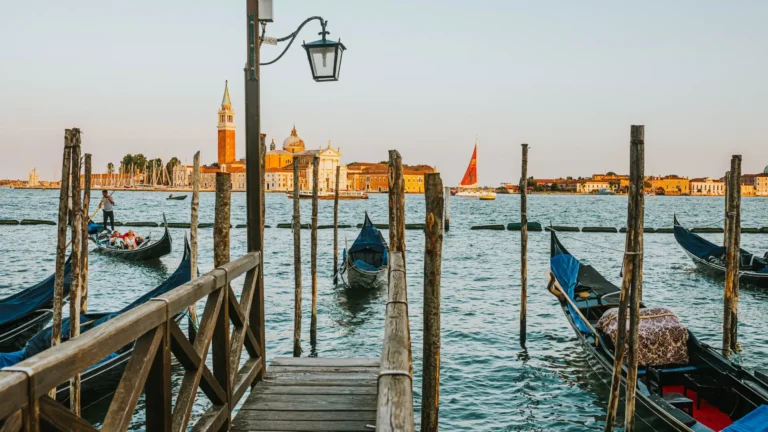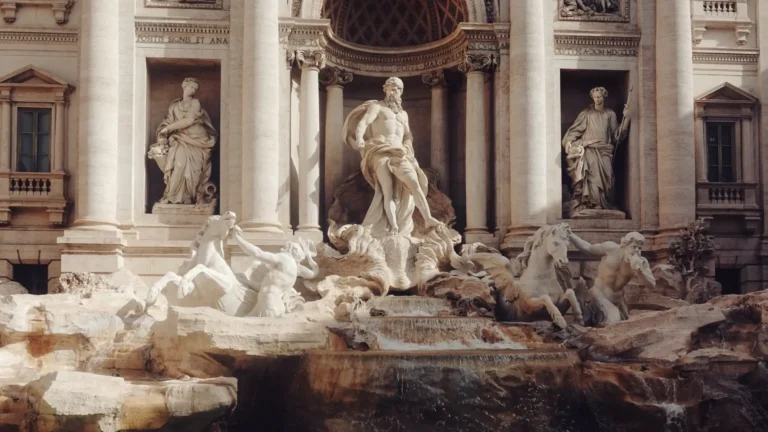
Once, travelling to Italy was the great undertaking of a life. The commercialisation of travel changed that.
Now it is something you just buy.
In the seventeenth and eighteenth centuries, young and wealthy Europeans, British aristocrats above all, would set out on what they called the Grand Tour. They would be gone not for a week, but for months, sometimes years, crossing the Alps by coach, slowly and at real risk, toward a country that existed for them mostly as rumour and painting. They came for the ruins, the art, and the light, taking in Florence, Venice, Rome and Naples, and the boldest went on as far as Sicily. They went, in a sense, to become more human. It was not the whole of their education, but it was thought to be the part that finished it, the part formal schooling could not give.
When Goethe travelled south between 1786 and 1788, he kept an account of it, later published as Italian Journey, and what stays with you reading it is how much he writes about what the journey did to him, not only what he saw.
The place worked on him. That was the point of going. Not to collect a country, but to be changed by it.
And here is the thing worth sitting with. That feeling has not disappeared. Most of us have experienced a smaller version of it. A morning in a place we did not expect to love. A conversation with a stranger. An unfamiliar landscape that somehow feels like it has always belonged to us. For a moment, the usual rhythm of life falls away, and we find ourselves completely present.
It is one of the few things left that can still do that to a person.
But it is not what the travel industry sells you anymore.
Somewhere between the Grand Tour and now, travel stopped being an experience and quietly became a product.
And most of us never noticed it happen.
Now, I want to be honest about that older world before I say anything against what replaced it.
It was a world open to almost no one. The Grand Tour belonged to the wealthy and the titled, to people with years and fortunes to spare. For everyone else, the world beyond their own region stayed a rumour their whole lives. There is nothing to envy in that, and I am not nostalgic for it.
What came next changed that, and mostly for the better.
Travel opened up. It reached the middle, then very nearly everyone. More people have now seen more of the world than any generation before them, and that is one of the genuinely good things the last century did. A person of ordinary means can stand in front of things their great-grandparents could not have dreamed of seeing.
That is not a loss. It is one of the quiet miracles of modern life.
So this is not a story about a golden age that we fell from. There was no golden age. The old way was richer in some things and poorer in almost everything else, and I would not trade the openness back for the romance.
The problem is not that travel became available to everyone.
The problem is what we let it become on the way there.
Here is what actually happened. Travel did not simply grow.
It became an industry.
And an industry, by its nature, optimises. It gets better and better at the thing it measures, the thing it can sell and scale and repeat. That is what industries are for, and it is usually a good thing. It is why a flight that once cost a fortune now costs very little, why you can see a dozen countries in the time it once took to reach one.
But an industry only ever optimises for what it can sell. Not for what is good. Not for what moves you.
For what sells.
And those are not the same thing. They sound like the same thing, which is exactly why the shift was so easy to miss. We assumed that an industry devoted to travel must be devoted to travelling well.
It is not.
It is devoted to selling trips, and selling trips rewards a very particular set of choices. The familiar over the unexpected. The photogenic over the quiet. The package that suits a hundred thousand people over the trip that suits you.
Whatever is easiest to sell at scale is what the machine learns to produce more of.
The gap between selling travel and travelling well is small enough to step over without noticing. But everything that went wrong over the last century lives inside that gap.
This, in the end, is what the commercialisation of travel really means. Not a plan anyone made, but an activity slowly reshaped around the sale.
You can watch it happen in stages, each one an improvement, each one a small surrender.
HOW THE COMMERCIALISATION OF TRAVEL HAPPENED
— step by step
The package holiday made travel simple and affordable for the masses, and in doing so it turned travel into a standardised product, sold the same way to great numbers of people for the first time. It worked, and it opened the door for millions who would otherwise never have gone. It also taught the industry the lesson it never unlearned, that travel sells best when it is standardised. The more identical the thing, the easier it is to sell a great many of them. The trip became a box, and the box sold.
The budget airlines took it further. They turned the journey itself into a commodity, stripped to the cheapest possible version of getting from one place to another, and they trained a whole generation to choose a destination by the price of the flight rather than any wish to be there. We began going places because it was cheap to go, which is a strange reason to decide where to spend the little time we have.
The booking platforms did something quieter and larger. They turned every hotel, every room, every experience into a searchable, comparable, rankable unit. Everything became a listing. And once everything is a listing, the only questions left are price, rating, and availability. The platform cannot ask whether a place is right for you. It does not know you. It only knows how to sort, and so we learned to choose the way it taught us to, by number of reviews and position in a list.
And then the image. Social media, and the influencer economy built on top of it, did the final piece of work. It turned destinations into backdrops and experiences into content. A place became worth going to because it photographed well, and the same handful of photogenic spots were fed to millions of people until everyone arrived wanting the identical picture. We outsourced our sense of what was worth seeing to an algorithm that was never optimising for meaning. It was optimising for attention, and it still is.
Each of these made travel easier. Not one of them was villainous. And together they did something none of them intended. They taught us to buy trips instead of taking them, and to mistake the two.
Which brings us to now, and to what travel has quietly become.
Destinations are brands. A place is marketed, positioned, and sold like any other product, with a campaign, an image, and a target audience. Towns compete for your attention the way soft drinks do. Some are pushed because they are ready to absorb more visitors, others because someone has paid to put them in front of you.
The map you are shown is not neutral. It is a market.
Experiences are products too. The things you do in a place are packaged, priced, and sold as add-ons, the way a dealer sells the extras on a car. A cooking class, a boat, a tasting, each one a unit on a menu, each one bookable in two clicks, each one sold to a thousand people before you and a thousand after.
And here is the part that is hardest to see, because it wears the costume of help.
Much of what is presented as expert advice is not advice at all.
It is distribution.
When many agents recommend a hotel, a tour, a supplier, they are recommending the ones they have an arrangement with, the ones that pay them. You believe you are being guided toward what is best for you. Often you are being steered toward what is most profitable to sell you.
The recommendation is real. The neutrality is not.
None of this is a conspiracy. No one sat in a room and decided to hollow travel out. It is simply what a system produces when every part of it is optimising for the sale. Each player acts reasonably, and the sum of all that reasonable behaviour is a machine that is extraordinarily good at selling trips and strangely bad at producing good ones.
That is the water we swim in now. And because we grew up in it, we mostly cannot see that it is there.
And so, without a single moment of loss, we lost things.
We lost discovery. It is almost impossible to discover anything now. Every place has been photographed, ranked, reviewed, and described ten thousand times before you arrive. You do not come upon things any more. You confirm them. You stand where you already knew you would stand, and feel what you were told you would feel, and the small shock of the unexpected, which was most of the point, is gone before you leave home.
We lost difference. When everyone is sold the same places, the same hotels, the same short list of things to do, trips begin to converge. People cross the world to have an experience almost identical to their neighbour’s, and come home with almost the same photographs to prove it. The whole machinery, built to open the world up, quietly funnels everyone toward the same few corners of it.
We lost trust, or we should have. When the advice you are given depends on who is paying the person giving it, advice becomes marketing in a better suit. Most travellers still do not know how much of what they are told is shaped by commission rather than judgement, and so they trust it, and the trust is quietly misplaced.
And most of all, we lost the person. The simple idea that a trip should be built around the one taking it. The system is not organised around you. It is organised around what is easiest to sell to the most people, which is never quite the same as what is right for any one of them. You were meant to be the point of the trip. Somewhere along the way you became the market for it.
And yet I do not want to leave it there, because ending on what was lost would not be true to the whole picture.
There was no golden age to return to. The old world was narrower and crueller and closed to almost everyone, and nothing about the openness that replaced it should be undone. The losses I have described are real, but they are only one side of it, and stopping at them would be the easy way out.
Because none of this machinery changed what travel actually is, underneath everything that has been built on top of it.
Strip away the brands and the listings and the packaged experiences, and the thing itself is still there, unchanged.
A place can still take a person out of their life and work on them in a way nothing at home could. That has not gone anywhere. It has only been buried, and buried is not the same as lost.
The product was laid over the experience. It did not replace it.
Which means the experience is still available to anyone willing to look past the product and plan for the real thing instead.
So what does it look like, to travel past the product?
It starts from the person, not the place.
Before where, and what, and how much, the real question is who.
Who is going, what moves them, what they are quietly hoping this trip will give them. Get that wrong and the most beautiful itinerary in the world is still the wrong one. Get it right and everything else has something true to be built on.
And it understands what a trip actually carries. A trip is never only money, though it is often a great deal of money. It is time that will not come again, a celebration, a year saved for, a once-in-a-long-while chance to be somewhere together. The investment is as much emotional as financial, and the weight of it is real. Planning it well means holding all of that, not just the logistics, because a trip that costs a lot and means a lot is not something to hand to a system that knows only how to sell.
It sees the places as the means, not the whole point. A destination is not there just to be seen and counted. It is something to be used well, in the right amount, in the right order, for the particular people travelling. The same town can be exactly right for one person and all wrong for another, and knowing which is which is most of the work.
It rests on judgement that answers to you and no one else.
Nothing recommended because it pays to recommend it. Nothing steered by a commission you cannot see.
Just an honest view of what actually serves the trip, which is the one thing the machine, for all its scale, cannot sell you, because the machine is built to move inventory and this is the opposite of that.
And it accepts that the best trip for you may look nothing like the best-selling one.
The popular trip was optimised to be sold to as many people as possible.
Yours is being built for one.
Those will almost never be the same thing, and the difference between them is the difference between a holiday you took and a holiday that was actually yours.
This is not a nostalgic idea.
It asks for nothing that has been lost. It only asks that the person planning the trip be planning it for you, and for the thing travel was always able to do, rather than for the sale.
The travellers who crossed the Alps three hundred years ago were not chasing a product.
They went to be changed, and they came home changed.
Almost everything about their world is rightly gone. That one thing should not be.
Because it is still true. Underneath the brands and the listings and the endless things for sale, travel can still take you out of your life and hand you back a little altered.
That was never the part for sale. It cannot be.
Travel became a product. But the personal experience was only ever buried, not lost, and it is still there for anyone who still wants the real thing.