Sicily’s east coast is the Amalfi Coast alternative most visitors never consider, and one of the most rewarding coastlines in Italy for those who do.
The Amalfi Coast is one of Italy’s most extraordinary destinations. The cliffs, the lemon groves, the towns built into the rock above the sea. It earns its reputation. If you are considering it, it is worth considering properly.
Sicily’s east coast is raw, beautiful and lively in a way that has nothing to do with the Amalfi Coast and everything to do with itself. Taormina on its hillside above the Ionian Sea. Catania built from black volcanic stone, its fish market one of the most extraordinary in Italy. Ortigia, the island within Syracuse, where Greek temples became a cathedral. A coast shaped by Etna, by three thousand years of arrivals from the sea, and by a food culture that is entirely its own.
It is not a substitute for the Amalfi Coast. It is a different Italy entirely, and for couples, families and honeymooners considering the Amalfi Coast alternative who want depth alongside the sea, it is often the better choice.
I plan both. The right one depends entirely on what you came for.
WHAT SICILY’S EAST COAST GIVES YOU
— that the Amalfi Coast doesn’t
The Amalfi Coast is one of Italy’s most visited destinations, and its fame brings a specific dynamic with it. A significant proportion of visitors arrive by ferry for a few hours, photograph Positano, and leave. The destination has become shorthand for the Italian coast, which means many people experience it as a highlight rather than a place to actually be. Those who stay longer find something different entirely.
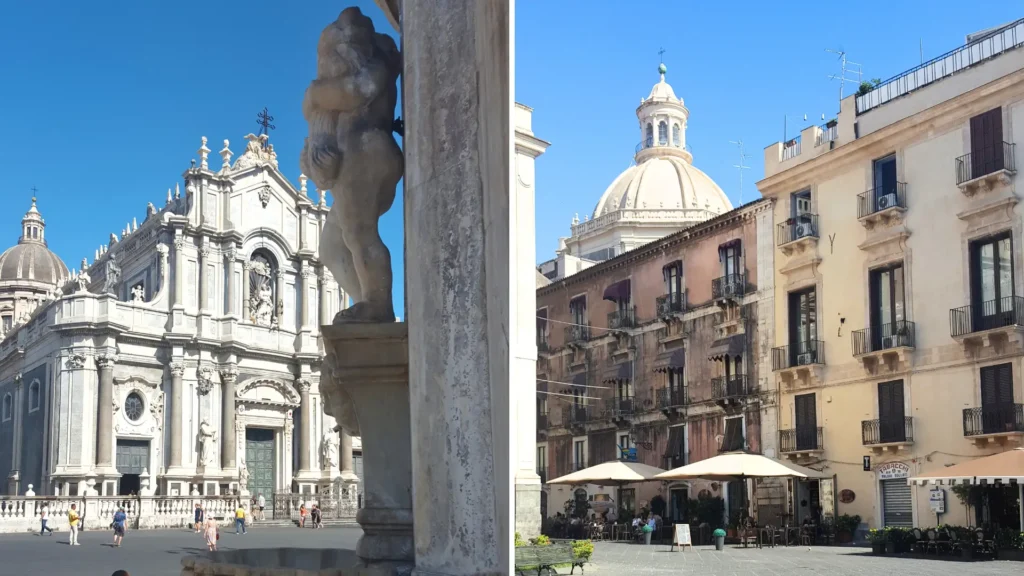
Sicily’s east coast attracts a different type of visitor. The cultural layers here, Greek, Roman, Arab, Norman, baroque, sit on top of each other in a way that takes time to read. Taormina has the views, but it also has the Greek theatre, the medieval streets, Etna visible above the town. Catania has its fish market, its baroque cathedral, its volcanic stone streets. Ortigia in Syracuse is an island within an island, where a Greek temple to Athena became a Roman building, then a Byzantine church, then a Norman cathedral. You do not absorb this in two hours.
Inland, the small towns add another layer entirely. Modica and its chocolate made to a pre-Columbian Aztec recipe. Caltagirone and its ceramic tradition on the Santa Maria del Monte staircase. The villages near Taormina where Francis Ford Coppola filmed The Godfather, Savoca, Bar Vitelli, the scene where Michael asks for Apollonia’s hand, reachable in twenty minutes by car from Taormina and genuinely worth the detour for anyone with a connection to the film.
The food is its own argument. Arancino, pasta alla Norma, granita, Modica chocolate that melts differently from any other chocolate you have tried. This is not a version of Campania food. It is Sicilian, entirely.
Sicily’s east coast rewards the people who stay. The Amalfi Coast rewards the people who visit. Both are valid. The question is which one you are. For those actively looking for an Amalfi Coast alternative, that distinction is the starting point.
WHO SICILY’S EAST COAST SUITS
— and why it works for each of them
Sicily’s east coast works for different reasons depending on who is travelling.
For families, the physical character of the destination matters as much as the experiences. The east coast is less enclosed than the Amalfi Coast, with wider open spaces and car-friendly roads. Taormina in the north, Catania and Syracuse further south, different bases for different lengths of trip, each with their own character and within reach of the same core experiences. Catania airport puts you directly into the east coast.
The destination works across ages because it has genuine variety, beaches, a volcano, ancient cities, inland towns, and the right balance between them depends entirely on who is travelling and for how long.
For couples, Sicily’s east coast offers the combination of intimacy and depth that a coast-only destination doesn’t. Boutique hotels, cultural richness alongside the sea, the setting that changes between Taormina above the Ionian and Ortigia within Syracuse. Space for romantic experiences and for celebrating a special occasion properly, alongside the non-obvious extension to the Aeolian Islands for those who want to go further. For honeymoons specifically, five romantic experiences on Sicily’s east coast are worth reading before you plan.
For buddymoons and multigenerational group travel, the accommodation options on Sicily’s east coast, villas with private gardens and pools, hotels, properties that work for different budgets within the same group, make the logistics manageable in a way that the Amalfi Coast physically cannot match. The cliffside geography of Amalfi means standalone villas with private space are rare and command significant premiums. Sicily’s east coast has the physical space to accommodate groups properly.
The mix of experiences keeps a large group satisfied without anyone compromising. Food and wine, culture, adventure on the volcano, the sea. Different people can have different days and still be in the same place. For multigenerational group travel, Sicily’s east coast is one of the strongest destinations in Italy.
“Vanya planned an unforgettable trip through Sicily for us. It was perfectly organized, and we will definitely seek her help again. Highly recommended!”
— M. Streng, Sicily, 25th Anniversary Trip
ETNA, THE COAST AND THE FOOD
— what Sicily’s east coast actually delivers
Sicilians call it Mamma Etna. It is visible from almost everywhere on the east coast, from Taormina above the Ionian, from Catania’s streets, from the sea. It is not a detour from the trip. It is part of it. A half-day private Jeep on the volcanic slopes, lava fields, crater views, a farmers lunch on the mountain. A helicopter flight above the crater for those who want the volcano from above. Etna erupts regularly, and if the timing is right, witnessing an active eruption from a safe distance is one of those things that cannot be planned for and cannot be replicated.
The volcanic soil produces wines that are gaining serious international recognition. Nerello Mascalese, the primary red grape grown on the slopes, has a mineral character and elegance that surprises those who associate Sicilian wine only with the fuller, heavier styles of the south. The estates on the slopes are worth visiting as an experience in their own right, not simply as a tasting stop. The altitude, the soil, the presence of the volcano above you — it changes how you understand what is in the glass.
The coast has a quality that is harder to describe but easy to recognise. The east coast has excellent beach clubs, private boat charters and boutique hotels directly on the water. It also has stretches of coastline that feel genuinely Sicilian, the seafront bars in the morning, the fish market in Catania, the towns that go about their day regardless of the season. Both versions exist and both are worth planning for.
The food follows the same logic. Arancino, cannoli with fresh ricotta, pasta alla Norma, granita, Nebrodi salumi from the mountain communities north of Etna. Entirely Sicilian, entirely its own.
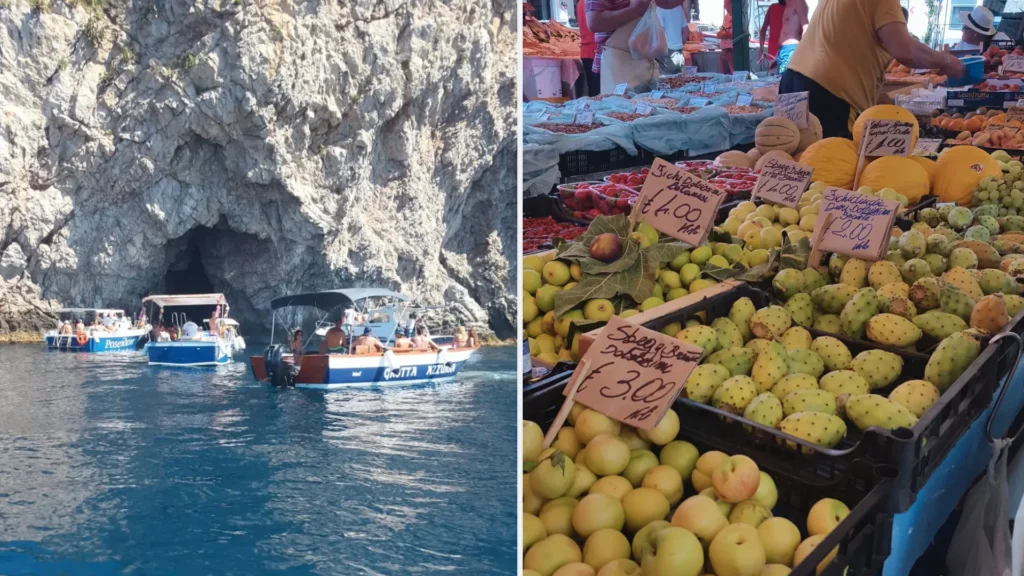
THE AEOLIAN ISLANDS
— the Sicily east coast extension most itineraries never reach
Most Sicily east coast itineraries stop where the island does. The Aeolian Islands sit just north of the east coast and are genuinely one of the least obvious additions to a Sicily trip, which is precisely why they are worth knowing about.
Seven islands, each with a different character. Lipari is the largest and the most accessible, a proper town to walk through, clear sea, local food, beaches on both the more serviced east coast and the wilder west. Panarea is the most exclusive, small, expensive and glamorous in a way that suits a specific type of trip. Stromboli is the most dramatic, an active volcano that erupts regularly and is visible from the sea at night.
Milazzo is the main ferry hub for the Aeolian Islands, reachable by car from Taormina, Catania, Syracuse or Palermo depending on the routing of your trip. Private charter and helicopter are also options depending on budget and preference.
Getting the timing right makes a difference to what the islands feel like, though even at peak season the Aeolian Islands never reach the level of crowds that the Amalfi Coast carries in summer. Which makes them a natural extension for anyone choosing Sicily’s east coast over the Amalfi in the first place.
Daily cruises between the islands, food and wine experiences, sailing between them. The Aeolian Islands work as a standalone extension or as the final chapter of a longer Sicily east coast trip. For those who want something genuinely off the standard Italy itinerary, they are the answer.
WHAT I TELL CLIENTS PLANNING SICILY’S EAST COAST
— timing, length and what to know before you book
Late June and early September are the strongest months for Sicily’s east coast. The sea is warm, the crowds are manageable and the islands are at their best before or after the peak. July and August work for those who don’t mind the busier version. The east coast handles summer better than the Amalfi Coast, but it is still peak season and should be planned accordingly. Late May is possible but the weather is less predictable.
Five nights is the minimum to do the east coast properly, and the more time available the better. Sicily is rich and requires time to absorb. Taormina, Catania and Ortigia in Syracuse are each worth more than a day, and the inland towns, Etna and the coast all compete for the same time. Adding the Aeolian Islands requires more. The east coast rewards those who want to stay longer.
Catania airport is the main entry point. Direct flights are widely available from the UK and major European airports, with seasonal connections from the US and Canada. Palermo airport offers even more connections and works well for those approaching Sicily from the west.
Sicily’s east coast works as a standalone destination or as part of a broader itinerary. Catania connects directly to Venice, Florence, Rome and Milan, which means it pairs naturally with northern Italy for those who want both. Naples works well as an addition for those building a wider southern Italy trip. For more on how tailor-made Italy itineraries work, read this.
SICILY’S EAST COAST AS AN AMALFI COAST ALTERNATIVE
— your questions, answered honestly
How long do you need on Sicily’s east coast?
Five nights gives you one area of Sicily’s east coast properly. Not the whole island, but enough time to settle somewhere, understand it and explore what surrounds it. That is a better five nights than trying to cover everything in one trip.
At five nights, one base works well. Taormina or Catania both give you access to the core east coast experiences without needing to move. Two bases are possible at five nights but feel rushed. A week gives two bases more room, Taormina in the north and Catania or Syracuse in the south, each with enough time to actually settle.
More days does not necessarily mean more bases. A ten-day trip can work from one or two bases depending on whether you prefer to move around or stay in one place and explore from there. Both approaches work on the east coast. The right one depends on who is travelling and how they like to experience a destination.
For the Aeolian Islands, allow at least three to four nights. One practical detail worth knowing before you book. Cars cannot be embarked on the islands for stays of under seven nights. This is a deliberate environmental policy to protect the islands. For stays of seven nights or more, car embarkation is possible. For shorter stays, cars are available to rent on the islands, and most of them are easily explored on foot, by scooter or by boat.
I plan Sicily’s east coast differently for every trip. The length, the bases, and the pace are always the first conversation.
When is the best time to visit Sicily’s east coast?
Late June and early September are the strongest months. The sea is warm, the conditions are good and the east coast has not yet reached its peak summer volume. The physical size of the island means crowds spread across multiple destinations rather than concentrating in one place, which makes Sicily’s east coast more manageable in summer than a compact coastal destination like the Amalfi Coast.
July and August are busy but workable. Ferragosto in mid-August brings Italian families to the coast alongside international visitors, and the most popular towns feel it. Planning around this rather than into it makes a significant difference. For those whose dates fall in August, the east coast still delivers. It just requires knowing where to base and how to structure the days.
September is excellent. The sea temperature is at its best, the summer peak has passed, and the atmosphere shifts. It is one of the most consistently good months on the east coast for both the coast and the cultural programme. September is also when the Bronte pistachio harvest begins on the slopes of Etna, one of the most specific food experiences the east coast offers and worth timing a trip around in odd-numbered years when the harvest takes place. September on Sicily’s east coast sits naturally within the broader autumn holidays in Italy window.
May is possible, but the weather is less predictable. Worth knowing before booking.
Winter is genuinely worth considering for those who are not coming for the sea. Taormina, Catania and Ortigia in Syracuse are all fully open and rewarding in the cooler months. Etna, wine tastings, the baroque cities, the fish market in Catania. The sea is there as a backdrop for a walk along the coast rather than a swim. In winter, the Etna IGP blood oranges are in season, a product specific to the volcanic soil around the mountain and worth seeking out between December and March. There is no shortage of things to do. The east coast simply asks for a different kind of trip in winter, and for the right visitor it delivers one.
Can you visit Sicily’s east coast and the Amalfi Coast in the same trip?
The most common question from those researching an Amalfi Coast alternative is whether they can do both in the same trip. You can. The practical connection is straightforward, fly between Catania and Naples, or include both as part of a broader southern Italy itinerary. The logistics are not the issue.
The honest question is whether it makes sense for your specific trip. Both are coastal destinations. Combining them means spending the majority of your time on two different coastlines, which works if the coast is specifically what you came for and you want to experience both. For most trips, it dilutes both rather than enhancing either.
The combinations that tend to work better are those that give Sicily east coast a different counterpart. Mountains, lakes, countryside, cities, landscapes that contrast with the coast rather than repeat it. These pairings give the trip genuine variety rather than doubling up on the same experience in a different location.
Sicily itself is also big enough to be a standalone destination that combines both. The east coast paired with the west, the baroque south-east, the interior. The island has enough variety that you never need to leave it to have a complete and varied trip.
If the Amalfi Coast and Sicily east coast are both on the list, the more useful question is which one suits this specific trip better, and whether the other one deserves its own trip entirely. For most people who have done one, the answer to the second question is yes.
I plan both separately and occasionally together. When I do combine them, it is always with a clear reason for why both belong in the same itinerary rather than as two boxes to tick. For everything on summer holidays in Italy, the full page is here.
Is Sicily’s east coast good for families?
Yes, and for a wider range of ages than most families expect.
The physical character of the east coast suits family travel well. It is less enclosed than the Amalfi Coast, with more open space, car-friendly roads and Catania airport giving direct access without a long transfer. The variety of experiences within reach of a single base means different ages find different things without the itinerary having to compromise.
The beaches vary considerably. Some are sandy, some are pebble, some are rocky. Giardini Naxos has shallower water that works well for younger children. Others are deeper. Beach clubs with facilities for families are available along the east coast, and the variety means there is usually a beach that suits the specific needs of the group. For families deciding between a villa or hotel in Italy, the practical differences are worth knowing before you book.
Etna works for families but requires matching the experience to the age. The mountain has low, medium and high altitude areas, and the right level depends on the children’s ages and energy. From around six or seven years old, Etna starts to become genuinely engaging. There are family-friendly experiences at different altitudes worth exploring rather than assuming Etna is only for older children or adults. Height on the mountain should always be considered when travelling with very young children.
The Aeolian Islands work for families. Lipari has beaches, though mostly pebble and rock rather than sand, which is fine for children. Older children and teenagers have more options for water activities. Boat excursions are available for all ages. The other islands have no specific age restrictions and are worth visiting as part of a broader Aeolian itinerary.
Sicily’s east coast works for families at all ages. The planning detail is matching the right experiences to the right ages, which is different for every family. For more on family holidays in Italy, the full page covers all versions of the trip.
What is the Amalfi Coast missing that Sicily’s east coast has?
The honest answer is that the Amalfi Coast is not missing anything. It is a different destination with a different character. For those specifically looking for an Amalfi Coast alternative, the question is which character suits your trip better.
The Amalfi Coast has a glamour and international recognition that Sicily’s east coast has not yet reached at the same level. That recognition comes with a price, literally and in terms of crowds. The Amalfi Coast drops straight into the sea, forcing its visitors onto a single narrow road. Sicily’s east coast has wide coastal plains, rolling hills and expansive beaches that naturally disperse crowds across a larger geography. The physical difference changes the entire experience of being there.
Sicily’s east coast has cultural layers that the Amalfi Coast does not – Greek, Roman, Arab, Spanish, Norman and Baroque, each visible in the architecture, the food and the character of the towns. The food culture specifically is shaped by centuries of Arabic, Spanish and Greek influence, which makes it distinct from Campanian cuisine and entirely its own.
The volcanic landscape, the wines grown in mineral-rich soil, the geological drama of the mountain present throughout the trip- these are specific to this part of Sicily and cannot be replicated elsewhere.
The Aeolian Islands as a natural extension. The accommodation variety, villas with private space, properties across different budgets, options that the cliffside geography of Amalfi physically cannot offer. The dynamic transitions between Mediterranean coastline, volcanic rock, rolling hills and ancient cities within the same itinerary.
Amalfi delivers its version of Italy with extraordinary intensity. Sicily’s east coast delivers several versions simultaneously. Which one you want depends entirely on what you came for.
Is it worth planning Sicily’s east coast with a specialist?
Not always, and the honest answer depends on what you want from the trip.
If you enjoy planning, have the time to research properly and are looking for the well-known experiences on the east coast, self-planning works. The information exists, the booking systems work and a straightforward Sicily east coast trip is entirely achievable without help. If you are weighing up whether a specialist is worth it, this is worth reading before you decide.
Where a specialist adds value is in the density of the destination itself. Sicily’s east coast has more to plan around than most Italian coastal destinations. The right base for the specific trip and group. The altitude considerations on Etna depending on who is travelling. The Aeolian Islands logistics, including the car embarkation rules that most self-planned trips discover only on arrival. The seasonal nuances, the Bronte pistachio harvest, the blood orange season, the quieter shoulder weeks that make a meaningful difference to how the destination feels. The accommodation landscape across different budgets and property types. None of this is immediately obvious from searching, and researching it properly takes significantly longer than most people expect.
For groups the case is stronger still. A multigenerational family trip or a buddymoon with different ages, different budgets and different ideas of a good day requires a level of coordination that self-planning struggles to deliver. Sicily’s east coast has the variety to satisfy a diverse group, but that variety needs to be matched to the specific people travelling. Getting that balance right is the planning detail that makes or breaks a group trip.
I plan Sicily’s east coast for those who want the deeper version of it and for groups who need everything to work for everyone. The first conversation is always about which one you are.