Getting around Italy with your family is one of those planning decisions that looks simple until you start researching it. Trains or rental car? Private transfers or public transit? The answer depends entirely on where you are going — and most families make the mistake of choosing one approach and applying it everywhere.
Italy is not one place. It is cities built for walking, countryside with no train access, mountain regions that require a car, and coastal towns where taxis are scarce and parking is a nightmare. Each part of your custom family vacation in Italy needs a different transport solution.
In this guide I share the approach I use when planning family itineraries in Italy, matching the right transport to each stage of the trip, so nothing gets left to chance. If you are reading top to bottom, start here. If you are looking for a specific situation, use the contents table to jump straight to it.
If you are planning to hand your Italy itinerary to a specialist rather than manage it yourself, this guide still matters. Understanding how transport works in Italy helps you have a better first conversation with whoever is planning your trip and helps you recognise when the logistics have genuinely been thought through rather than guessed at.
Why relying on just one way to travel in Italy leads to family logistics stress
Most families planning how to get around Italy feel they need to pick a side. Trains only, or rent a car for everything. But applying one transport solution across an entire Italy family vacation is where the problems start.
Drive a rental car into Florence city centre and you are navigating narrow, pedestrian-heavy streets while risking camera-enforced ZTL fines fines that arrive weeks after you return home, long after the trip is over. Rely only on trains for family travel in Italy through rural Tuscany and you end up stranded miles from your agriturismo, private villa or hilltop town with no realistic connection. Both mistakes are common. Both are completely avoidable.
Getting around Italy with kids requires a different approach for each stage of the trip — matching the right transport to the right destination rather than forcing one solution onto every leg of the itinerary.
What is the most stress-free strategy for families to get around Italy?
The most effective strategy for getting around Italy with your family is to match the transport to the destination rather than applying one approach to the entire trip. Different parts of Italy require fundamentally different solutions. Here is the three-tier approach I use for every family Italy itinerary:
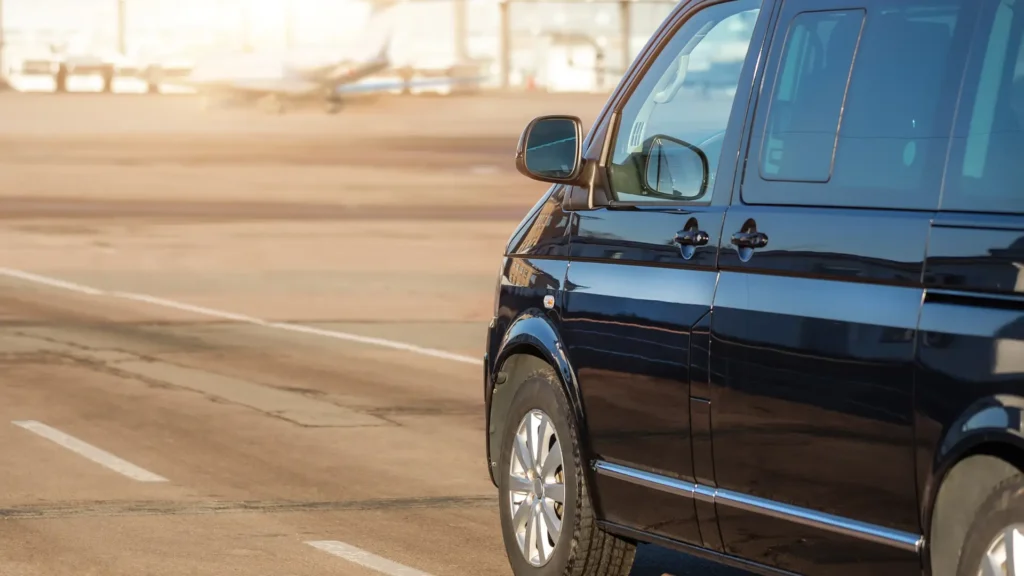
• Arrivals/Departures – private door-to-door transfers: Book a pre-arranged private transfer for every airport and train station arrival. Arriving in a new Italian city after a long flight with children, heavy luggage and no confirmed ride is one of the most avoidable sources of family travel stress. A pre-booked NCC transfer means a driver is waiting at arrivals regardless of delays, the vehicle is the right size, the price is fixed, and nobody is dragging bags through a crowded terminal hunting for a taxi rank.
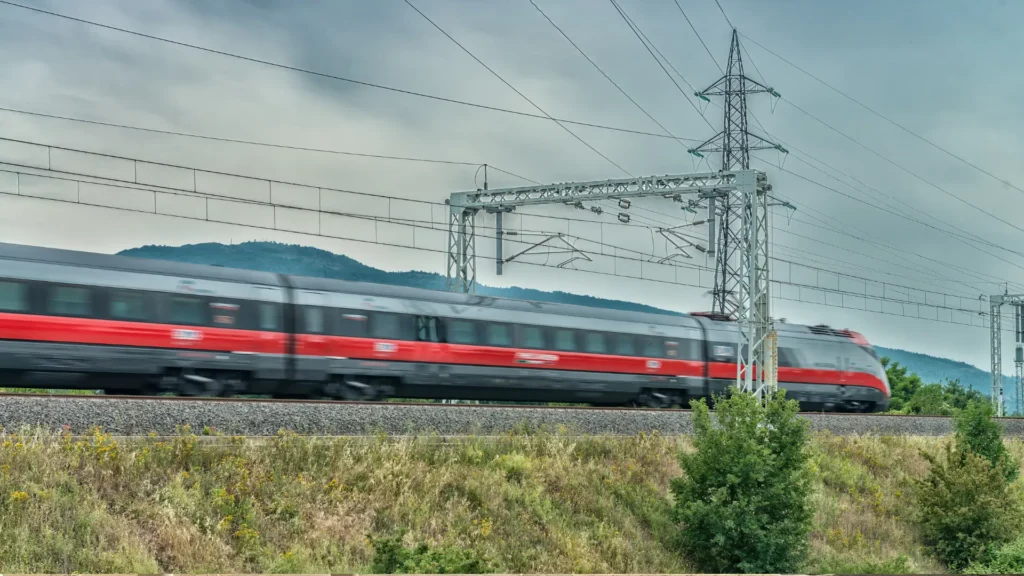
• City to city — Italian high-speed trains: For connections between Rome, Florence, Milan, Naples, Bologna and Venice, Frecciarossa and ItaloTreno high-speed trains are the correct choice for Italy family travel. The Frecciarossa covers Rome to Florence in 1 hour 30 minutes and Rome to Milan in under 3 hours — faster than flying once airport transfers are factored in. Trains also eliminate ZTL risk, urban parking and city driving entirely. High-speed rail extends to Bolzano and Trento, making it the natural gateway for families planning a winter family trip to the Dolomites.
• Countryside and mountains — rental car or private driver: Outside the high-speed rail network, a rental car or private driver is the only realistic solution. The rail system simply does not reach rural Tuscany, Umbria, Puglia, Sardinia or the Dolomites with the access a family needs. More on this below.
Using Italian high-speed trains for city-to-city family travel
Leave the car behind in Rome, Florence, Naples and Venice
For families travelling in Italy with young children or getting around Italy with teenagers, city-to-city travel is about protecting your energy for the things that matter. Italian high-speed trains are the correct choice for every major urban connection — and not just because they are fast.
Driving into Rome, Florence or Naples means navigating one-way systems, pedestrian zones and camera-enforced ZTL areas where a single wrong turn generates an automatic fine. Finding parking near a central hotel in Florence can add an hour to any arrival. The train eliminates all of that. You arrive at a central station, walk or take a short taxi to your accommodation, and your day begins.
Frecciarossa connects Rome to Florence in 1 hour 30 minutes, Rome to Naples in 1 hour 10 minutes, and Rome to Milan in under 3 hours. ItaloTreno runs the same major routes at competitive prices. For family travel in Italy, booking Business or Prima class carriages on longer routes is worth the small premium – wider seats, more space, and a quieter environment make a significant difference with children.
Italian city centres are built for walking. Once you arrive, a centrally located hotel or apartment means most of what you want to see is on foot. For longer distances within a city, authorised white taxis or occasional metro use are sufficient. A rental car in any major Italian city is a liability, not an asset.
Read more → Getting the transport right is one piece of the puzzle. How you structure the days around it, the pacing, the balance between activity and rest, the rhythm that works for every age in the group, is what separates a good Italy trip from a great one. Here is how I plan family itineraries in Italy from start to finish.
What is the best way to travel around the Italian countryside and mountain regions?
A rental car is non-negotiable for rural Italy
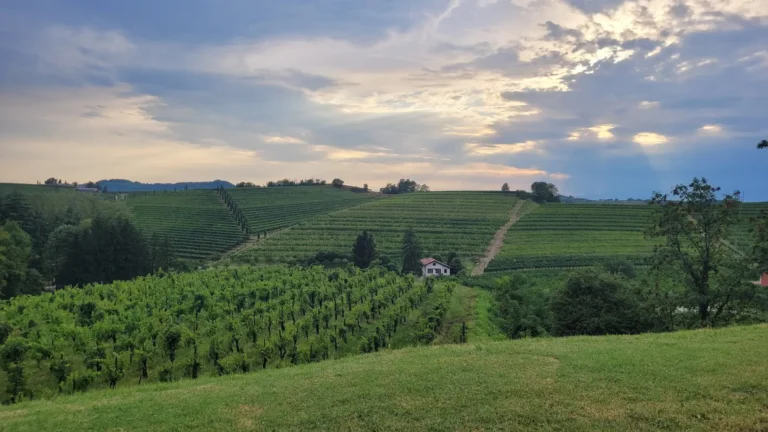
For any part of your Italy family itinerary outside the major city hubs, a rental car is not a preference, but it is a logistical necessity. The Italian high-speed and regional rail network connects cities efficiently, but it does not reach the Tuscan countryside, Umbria, Puglia, Sardinia or the Dolomites with the frequency or proximity a family travelling in Italy actually needs.
Most private villas, agriturismos and boutique mountain lodges sit miles from the nearest station — and in many rural areas, local buses run twice a day at best. Relying on public transit in these regions creates genuine transit dead zones where your family is either stuck waiting or paying for expensive last-mile taxis that were never factored into the plan.
A rental car eliminates that entirely. It is the difference between an itinerary that works on paper and one that works on the ground.
Is driving in Italy with your family actually manageable?
This is the question most families ask once they accept that a rental car is necessary. Italy has a reputation for chaotic driving — and in city centres, that reputation is earned. But outside the major cities, driving in Italy is genuinely straightforward.
The Tuscan countryside, Umbria, Puglia and Sardinia are served by well-maintained roads with clear signage and light traffic outside of peak summer weekends. The Dolomites require some comfort with mountain driving, but the routes connecting major valleys and lodges are paved, well-signed and driven daily by families with children. None of it requires advanced driving skill — it requires the right car for the terrain and a realistic daily distance.
A few practical things that make renting a car in Italy with your family significantly easier:
Book the right size — a mid-size SUV or estate car handles luggage, car seats and mountain roads far better than a compact. Book this in advance, not at the counter.
Where you collect matters — picking up a rental car at a major airport is straightforward and stress-free. Collecting from a city centre location is manageable when you are heading directly out of the city – a family collecting from Rome Termini and driving straight to Tuscany, for example, is a perfectly logical move. What to avoid is collecting a rental car in a city centre when you still have urban sightseeing ahead of you. Park it, navigate the city on foot and by taxi, then collect when you are ready to leave.
Automatic transmission — request it explicitly when booking. Manual is standard in Italy, and availability of automatics is limited, especially in peak season.
Driving in Italy with kids is manageable when the car is right, the route is planned and the city driving is avoided entirely. That combination removes the anxiety and leaves you with the genuine freedom that rural Italy requires.
Read more → If Tuscany is part of your family’s Italy itinerary, where you base yourself determines everything — how much you drive each day, what you can realistically see, and how the trip actually feels on the ground. Read the dedicated guide: How to choose your family’s Tuscany home base and avoid the 3 biggest pitfalls.
Private transfers in Italy – when and why they make sense for families
Getting around Italy: transportation tips for high-stress moments
For arrivals and departures, a pre-booked private NCC transfer is the right choice for almost every family travelling in Italy. The difference from a standard taxi is significant and specific:
Flight monitoring — your driver tracks the flight in real time and is waiting at arrivals regardless of delays. No hunting for taxis after a long international flight with children.
Meet and greet — the driver meets your family at the arrivals hall with a name sign, immediately after baggage claim. No navigating Fiumicino or Malpensa terminals trying to find a taxi rank.
Correct vehicle size — pre-booked in advance, so the van or minivan is confirmed before you land. Not whatever is available at the rank.
Fixed pricing — the rate is agreed before departure and includes tolls and supplements. No meter, no surprises.
For high-impact family day trips to sites like Pompeii, Orvieto or Civita di Bagnoregio, a private driver is the most effective way to protect the day. Driving unfamiliar roads to a major archaeological site, then finding parking and navigating back adds significant stress to what should be a memorable family experience. A private driver removes all of that.
For families celebrating a milestone birthday in Italy or a multigenerational family reunion, a dedicated private driver for the entire itinerary is worth serious consideration. Large groups, multiple generations, an occasion where the experience itself should be the only thing anyone is thinking about — a private driver removes every logistical variable from the equation.
How to get around Italy with your family — a real itinerary example
Here is how this approach works in practice. I planned a family Italy itinerary for a family of six, four children aged 6 to 12, covering Naples, Rome and Tuscany over ten days. Every transport decision was made deliberately, matching the right option to each leg of the trip.
Naples arrival — private NCC transfer The trip began with a private Meet and Greet transfer from Naples Airport (NAP) directly to their central Naples accommodation. Six people, ten bags, end of a long international flight. A taxi rank was never a realistic option. Their driver was waiting at arrivals, the vehicle was confirmed in advance, and they were at the hotel within 40 minutes of landing.
The following day, the same private driver took the family to Pompeii. The Circumvesuviana train connects Naples to Pompeii and is perfectly functional for solo travellers. For a family of six with young children, a private Mercedes van door to door was the right call. Their guide met them at the excavation gates.
Naples to Rome — Frecciarossa Business class For the city-to-city leg, the family took the Frecciarossa from Naples Centrale to Roma Termini. One hour and ten minutes, wide leather seats, extra legroom and a quiet carriage. For a small premium over standard class, Business carriages give families the space to decompress between cities without the stress of managing children in a crowded standard carriage. I recommend this upgrade on every train journey over an hour.
In Rome the family walked. Their central hotel put everything within reach on foot, with occasional taxis for longer distances across the city. No car, no parking, no ZTL risk.
Rome to Tuscany — rental car To reach the Tuscan countryside, the family collected their pre-booked rental car from Rome. Driving directly out of the city towards the Maremma coast, they had complete flexibility for the rural leg, exploring the rugged Maremma coastline, Lucca and Pisa entirely at their own pace. The trip ended with a rental car drop-off at Pisa Airport (PSA) for the flight home.
Private transfer for the high-stress arrival. High-speed train for the city-to-city connection. Rental car for rural discovery. Each leg matched to what it actually required. That is how to get around Italy with a family without the logistics becoming the story.
Getting the transport right is one of the most detail-heavy parts of planning an Italy family itinerary. Every leg requires a different decision, and a wrong one at any stage costs time, money or energy that should have gone into the trip itself.
If reading this has confirmed that this is more complexity than you want to manage yourself, that is exactly the kind of thinking I do for every family I work with. The transport decisions, the ZTL warnings, the train class upgrades, the rural transfer gaps — none of it reaches you as a problem to solve. It is handled before you arrive.
Here is how I work with families to plan their Italy from start to finish.
Frequently asked questions about getting around Italy with your family
What is the best way to get around Italy with a family?
The best way to get around Italy with a family is to match the transport to the destination rather than choosing one approach for the entire trip. Italian cities are built for walking and served by an excellent high-speed rail network connecting Rome, Florence, Milan, Naples and Venice efficiently. The countryside, mountains and coastal regions require a rental car or private driver because the rail network does not reach most private villas, agriturismos or boutique lodges with the frequency a family needs. Airport and station arrivals are best handled with a pre-booked private NCC transfer. Each leg of the itinerary has a correct answer. The mistake is applying the same solution to all of them.
Do families really need a rental car in Italy or can you manage without one?
Do families really need a rental car in Italy or can you manage without one?
It depends entirely on where your itinerary takes you. Families travelling in Italy who stay within major cities – Rome, Florence, Naples, Milan, Venice – do not need a rental car at any point. The train handles city-to-city movement and everything within the city is walkable or a short taxi ride.
The moment your itinerary includes rural Tuscany, Umbria, Puglia, Sardinia or the Dolomites, a rental car becomes non-negotiable. Most private villas and boutique mountain lodges sit miles from the nearest station and local buses in these regions run infrequently. Renting a car in Italy for the rural legs of a family trip is not optional . It is the only solution that gives you the access and flexibility the itinerary requires.
We have been to Italy before but always stayed in cities. How does transport work when you want to explore the countryside?
This is the most common shift families make on a second or third Italy trip — moving beyond the cities into the regions that make Italy genuinely extraordinary. The transport logic changes completely once you leave the urban rail network.
For family travel in Italy outside major cities, the practical reality is that public transport was built for local commuters, not for visitors trying to reach a Tuscan agriturismo or a Dolomites lodge. A rental car collected at your departure city, rather than in a city centre while you still have urban sightseeing ahead, gives your family the flexibility to explore at your own pace. Combining a high-speed train for the city-to-city leg with a rental car collected at the end of the urban section is the approach I use for almost every family itinerary that includes a rural component.
How do Italy family travel planners handle transport logistics and what does that actually include?
When I plan transport for a family Italy itinerary, every leg is decided before the trip begins. That means pre-booked NCC transfers for every airport and station arrival, Frecciarossa or ItaloTreno tickets booked in the correct class for the group size and journey length, rental car arranged for the rural sections with the right vehicle confirmed in advance, and private drivers booked for day trips where driving to a site and finding parking would cost the family significant time and energy.
It also means the details families would not think to check – ZTL zone warnings for cities on the itinerary, station mismatches where a train arrives at a different station from the one the onward connection departs from, shuttle timings that do not align with check-in windows. None of that reaches the family as a problem to solve. It is identified and resolved before they travel.
What is the most common transport mistake families make on an Italy vacation?
The most common mistake when figuring out how to get around Italy with a family is choosing one transport solution and applying it everywhere. Families who rent a car for the entire trip end up driving into Florence or Rome city centres, where ZTL camera fines arrive weeks after they return home and parking near a central hotel can take an hour. Families who rely only on trains end up stranded miles from their rural villa or agriturismo with no realistic last-mile connection.
The second most common mistake is underestimating arrivals. Landing in a new Italian city after a long international flight with children and heavy luggage, with no confirmed transfer, is one of the most avoidable sources of family travel stress. A pre-booked private transfer costs a small premium over a taxi and eliminates every variable – confirmed vehicle size, fixed price, driver tracking the flight in real time.