When people ask me about an Italy Dolomites family holiday, the first question I ask back is: how old are your children? Not because the Dolomites only work for certain ages. Because the answer tells me everything about how the trip needs to be designed.
I planned a two-week Dolomites trip for a family of eight recently. The ages ran from nine to twenty-two. Two parents with completely different ideas about what a holiday should look like. Four children old enough to want their own version of the trip. Two younger ones who just wanted to keep up.
The nine-year-old did the same Via Ferrata as the twenty-two-year-old, because I specifically researched a route graded for younger children and paired it with a professional kid-friendly guide. The younger children had their own day while the older group did demanding canyoning. The parents had a morning to themselves while the older kids did downhill mountain biking. Nobody compromised. Nobody disengaged. Every person in that family had at least one day that was built specifically for them.
That is what a well-planned Italy Dolomites family holiday actually looks like. Not a trip where everyone tolerates the same itinerary. A trip where the design does the work.
The Dolomites, in particular, give a mixed-age family more options per day than almost anywhere else in Italy.
WHY THE DOLOMITES WORK FOR FAMILIES
— with mixed ages
Most Italian destinations give a mixed-age family a good holiday. The Dolomites give every person in the family a different version of the same holiday, running in parallel, on the same day.
The reason is the activity range and how it scales. Via Ferrata routes are graded from beginner to expert, the same experience in principle, calibrated completely differently in practice. A route chosen for a brave 9-year-old with a kid-friendly guide is genuinely challenging for a 22-year-old on a harder line nearby. Canyoning, kayaking, rafting, fishing, downhill biking, and horseback riding, most of these have a version for every age and fitness level. The mountains do not ask the family to agree on what kind of holiday they want. They absorb every version of it simultaneously.
The base-and-explore logic matters too. The Dolomites reward staying in one place and moving outward each day rather than moving accommodation every two nights. For families with younger children, that stability reduces the logistical load significantly. For teenagers and young adults, it means independence. They can do the demanding canyoning while the younger children do something entirely different, and everyone returns to the same place in the evening.
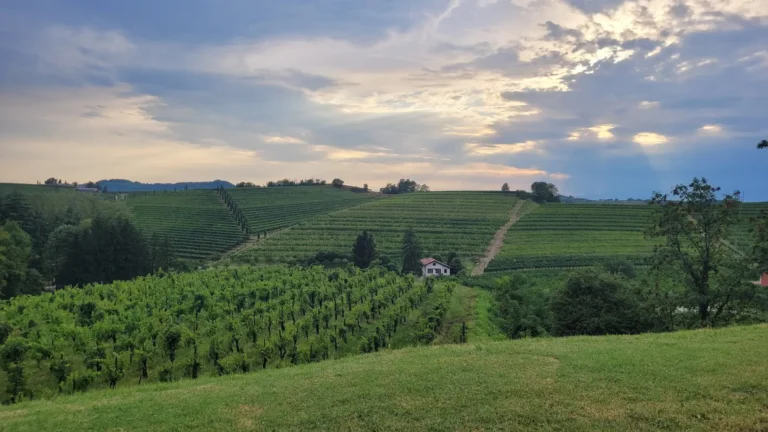
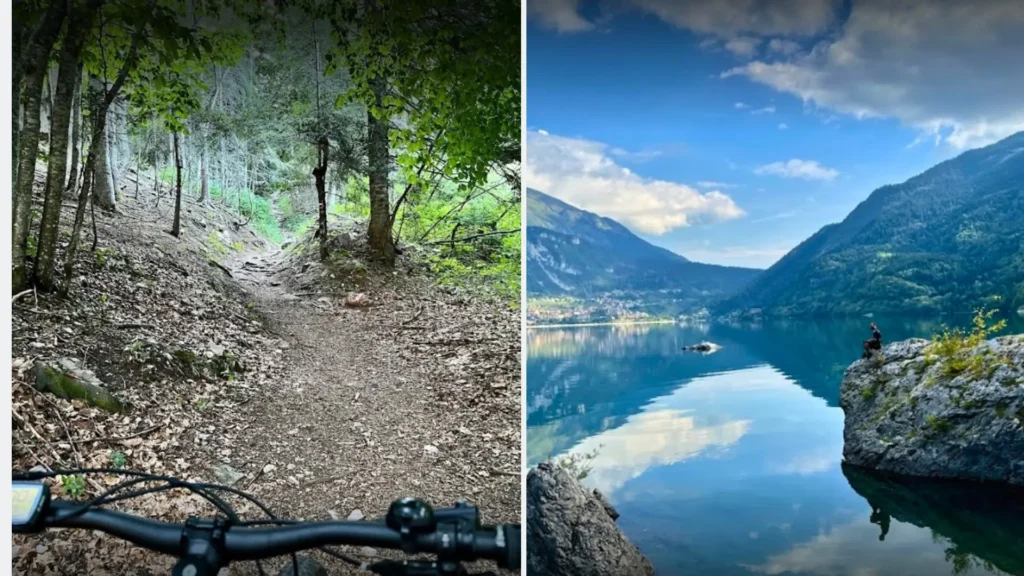
The family I planned this trip for based themselves in the Molveno and Andalo area of the Brenta Dolomites. It gave them lake swimming, flat cycling routes, miniature golf, and easy access to the bigger adventure activities without long drives between them.
But the Dolomites have many valleys, each with a different character. Alpe di Siusi in Alto Adige is one of the largest high-altitude meadow plateaus in the Alps, flat, open, and walkable for anyone in the group who wants a gentler day. Val Gardena, Val di Fassa, and the area around Cortina all offer the same mix of scale and accessibility, each with its own rhythm. Choosing the right valley for your specific family is one of the first decisions worth getting right.
If you want a deeper overview of the Dolomites valleys and how to choose the right base for your family, I put together a complete Dolomites planning guide that covers all of it.
HOW I DESIGNED A TWO-WEEK ITALY DOLOMITES FAMILY HOLIDAY
— for eight, across different age groups
The brief was clear from the first conversation. A family of eight, six children ages nine to twenty-two, ranging from a bookworm who loved science and piano to a twenty-year-old who wanted three activities in a day, and two parents with different ideas about what a holiday should feel like. The challenge was not finding enough to do in the Dolomites. It was building a structure where nobody ever felt like they were on someone else’s trip.
The Dolomites have more family-friendly activities than almost anywhere else in Italy. The difficulty is not finding things to do. It is knowing which version of each activity works for which age, which operators grade correctly, and which constraints exist that do not appear anywhere on a booking page.
Here is what that looks like in practice from the trip I planned.
I organised the activities around four principles.
ACTIVITIES THAT WORKED FOR every age AT ONCE
Some experiences do not need to be split or calibrated. They simply work. Kayaking on the lake, fishing with a local guide who provided all the equipment, the Alpine Coaster at Gardonè, miniature golf at Molveno. These were the days where eight people did the same thing, and nobody needed a modified version. These are the days that define what a well-planned Italy Dolomites family holiday feels like.
ACTIVITIES CALIBRATED BY difficulty WITHIN THE SAME EXPERIENCE
White water rafting in the Dolomites is available from age six. The Novella Gorges kayak excursion from age five. These are not gentle alternatives. They are the same experiences the older group did, made available to younger children because the activity itself is graded for safety across different age spans. The grading information exists, but it is scattered across Italian-language operator websites, local listings, and knowledge that many aggregator platforms have not consolidated. Knowing which operator, which stretch of water, and which minimum age applies requires research that goes beyond a booking platform search.
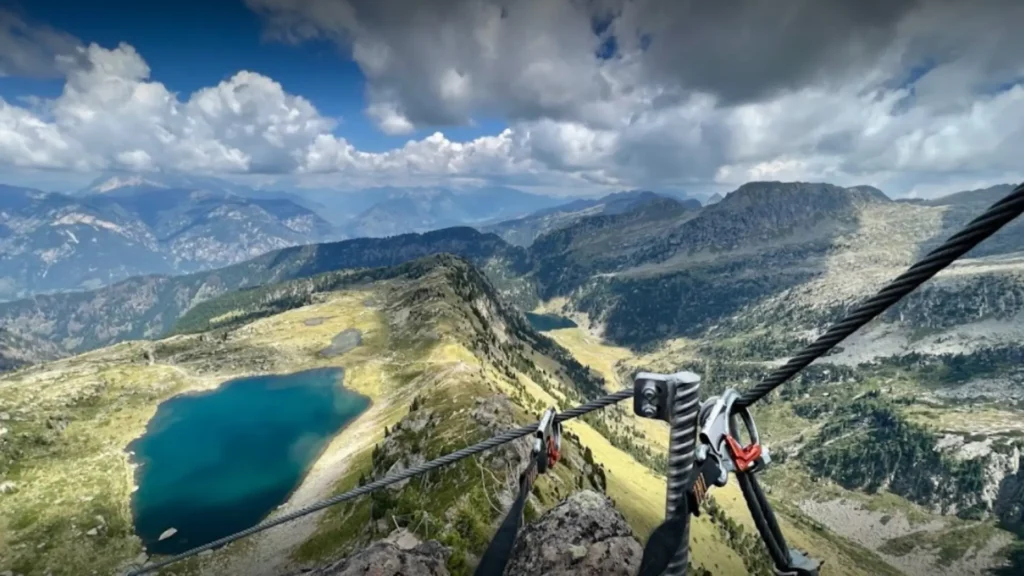
The Via Ferrata Cermis Skyline was the centrepiece of the first week. I researched a route suitable for every age in the group and paired it with a local family-friendly guide. The nine-year-old did the same climb as the twenty-two-year-old. Nobody was doing a simplified version. The route worked across the full age span because the right preparation made it safe for the youngest without making it trivial for the oldest.
ACTIVITIES SPLIT BY age and ability
Not every day needs everyone together. The Rio Briz canyoning in Cavedago has a minimum age of fourteen. On this trip, that meant the older group did Rio Briz while the younger children did something else entirely. That split was planned in advance. A family that books canyoning without knowing the age restriction shows up with a nine-year-old and a problem.
The horseback riding day is the clearest example of how split-group planning works when it is done properly. Italian road safety law prohibits children under fourteen from riding on public roads. Most families discover that and hit the wall, and add horse riding to the “when they grow up” list. I planned a version that worked for both under fourteen and over fourteen in advance at the same location.
The older group and adults did a fifty-minute trail ride. The children under fourteen did ring rides at the same farm, ten minutes each, while the older group was out on the trail. The family was in the same place at the same time. Nobody missed the experience.
Gardaland worked as a dedicated day for the younger children while the older group did their own thing. The downhill mountain biking at Paganella Bike Park was for adults and older teenagers. The under-fourteen group had their own day built around their pace and interests, not around fitting into someone else’s.
THE LOGISTICS OF split days
Running two groups doing different things on the same day requires careful evaluation of timing, distances, and activities before the day begins, and good on-the-ground management to make sure it holds together once it does.
This is the invisible planning layer of any self-planned mixed-age itinerary. It looks effortless when it works. It is the planning layer that separates a well-designed Italy Dolomites family holiday from one that cracks on day three.
For multigenerational groups and families travelling across a wide age span, this is precisely the planning layer I build before anything else is confirmed.
“Vanya helped our family plan an unforgettable trip to Trentino. She was always responsive and happy to go the extra mile, even with fairly unusual requests. I recommend Design Your Italy very highly.”
— Joel P., Family of Eight, Dolomites, Trentino
HOW TO PLAN AN ITALY DOLOMITES FAMILY HOLIDAY
— that works for everyone
The Dolomites in summer give a mixed-age family more parallel options per day than almost anywhere else in Italy. The mountains absorb every version of a holiday simultaneously, the parent who wants structure and the one who does not, the nine-year-old who just wants to be with family and the twenty-year-old who wants to fill every hour.
Planning it well means knowing the activity grading systems, the Italian legal constraints that do not appear on booking pages, the operators worth trusting, and how to build split days that hold together on the ground. It also means knowing which valley suits your specific family, which base gives you the right combination of access and pace, and where the breathing space needs to go so the packed days feel worthwhile rather than exhausting.
This is also one of the most requested multigenerational Italy holiday structures I plan at Design Your Italy. Families that span young children, teenagers, young adults, and parents with competing ideas about what a holiday should feel like. The Dolomites work for all of them, but only when the design does.
If you are planning a summer holiday in Italy and the Dolomites are on your list, this is how I work with families planning an Italy trip. If you want to understand what a fully designed Italy family holiday looks like from first conversation to departure, this is where to start.
PLANNING AN ITALY DOLOMITES FAMILY HOLIDAY
— your questions, answered honestly
How long should a summer family holiday in the Dolomites be?
Two weeks is what I recommend for a mixed-age family with children spanning a wide age range. One week is enough to explore one valley and do four or five activities well. Two weeks allows you to use a single base and build a rhythm, some days packed, some days loose, without the itinerary feeling either rushed or flat. For the family I planned this Italy Dolomites family holiday for, two weeks gave every person in the group enough days to have their own version of the trip without compromising anyone else’s.
What is the best base for a summer family holiday in the Dolomites with mixed ages?
There is no single answer, and any recommendation that gives one without knowing the family is guessing. The right base for an Italy Dolomites family holiday depends on the ages in the group, the activities that matter most, how much driving the family wants to do each day, and whether lake access matters alongside mountain access. The Brenta Dolomites around Molveno and Andalo suit families who want lake swimming and flat cycling alongside adventure activities.
Val Gardena and Val di Fassa give easier access to higher altitude trails and the Alpe di Siusi plateau. The area around Cortina suits families who want a more polished base with strong infrastructure. The right base is one of the most important decisions in planning an Italy Dolomites family holiday.
What can young children do on a Dolomites family holiday that teenagers will also enjoy?
More than most families expect. White water rafting in the Dolomites is available from age six. The Novella Gorges kayak excursion runs from age five. These are not modified children’s versions — they are the same experiences older teenagers and adults do, made available to younger children because the activity is graded for safety across different age spans.
The Via Ferrata, on the right route with a kid-friendly guide, works for a brave nine-year-old and is genuinely demanding for a twenty-two-year-old on the same climb. Kayaking on the lake, fishing with a local guide, the Alpine Coaster, horseback riding – these are the days where a mixed-age Italy Dolomites family holiday stops feeling like a compromise and starts feeling like the same trip for everyone.
Can young children do Via Ferrata in the Dolomites?
Yes, on the right route with the right guide. Via Ferrata routes in the Dolomites are graded from beginner to expert, and some are specifically suitable for younger children when paired with a professional, kid-friendly guide. The key is knowing which route is graded appropriately for the youngest person in the group without making it trivial for the oldest.
A young child doing the same Via Ferrata as a teenager or young adult is not unusual when the route has been specifically researched for that age span. What makes it work is the preparation – the right grading, the right guide who knows how to manage a mixed-age group on a technical route. It is not information that exists cleanly on a booking platform. It requires knowing the specific routes and operators in the area.
It is one of the most rewarding moments in an Italy Dolomites family holiday when it works.
What activities in the Dolomites are suitable for teenagers but not young children?
Several, and knowing which ones have age restrictions in advance, is part of planning a mixed-age Italy Dolomites family holiday properly. The Rio Briz canyoning in Cavedago has a minimum age of fourteen. Demanding canyoning routes generally require teenagers and above. Downhill mountain biking at parks like Paganella Bike Park suits older teenagers and adults rather than young children.
Horseback riding on public roads is restricted to those fourteen and above under Italian road safety law, younger children can ride within the ring at the same location, but cannot join the trail. These are not restrictions that appear prominently on booking pages. A family that arrives without knowing them either misses the experience entirely or discovers the constraint at the gate. Planning around them in advance means the split happens by design rather than by surprise, and every age group has something worth doing on the same day.
Do you need a car for a summer family holiday in the Dolomites?
For a mixed-age family doing split-day activities, yes. Public transport in the Dolomites is reliable for getting between major towns and valleys, but for more flexibility and to reach activities that public transport simply does not reach, you need a car. The drive times between activity sites matter, not the optimistic estimates on a maps application in August with tourist traffic, but the realistic time that also allows for delays based on summer traffic.
For families staying in one base and doing straightforward days out together, public transport is a genuine option and worth considering. For a family with mixed ages where the itinerary involves split groups, parallel activities, and precise timing, a car is not optional. It is part of how the day holds together.